




- NYCU’s Tech-Art Innovation Takes Center Stage Across Europe and Asia
- NYCU College of Management Wins 2025 WRDS Innovation Award
- From Rising Rankings to Global Presence: NYCU’s First Showcase at the QS Asia-Pacific Summit Exhibition
- NYCU and NCSIST Forge Strategic Alliance to Advance Taiwan’s Defense Technology Independence
- NYCU Wins World Award: Taiwan’s Computer Music Champion Returns
NYCU and Nobel Laureate Unveil Breakthrough Algorithm to Accelerate Protein Structure Search and Drug Discovery
(中央社訊息服務20251202 11:35:02)Accurately predicting and comparing protein structures is one of the most critical challenges in modern biotechnology, shaping how scientists understand drug–target interactions and develop new therapeutics. Now, researchers at National Yang Ming Chiao Tung University (NYCU) have achieved a breakthrough—one that addresses the exploding volume of global protein data and could transform next-generation drug discovery.
Associate Professor Wei-Cheng Lo from NYCU’s Department of Biological Science and Technology, in collaboration with Nobel Laureate in Chemistry Arieh Warshel, has developed SARST2, a high-performance algorithm capable of rapidly searching and comparing protein structures across databases containing hundreds of millions of entries. The study, titled “SARST2: High-throughput and resource-efficient protein structure alignment against massive databases,” was recently published in Nature Communications.
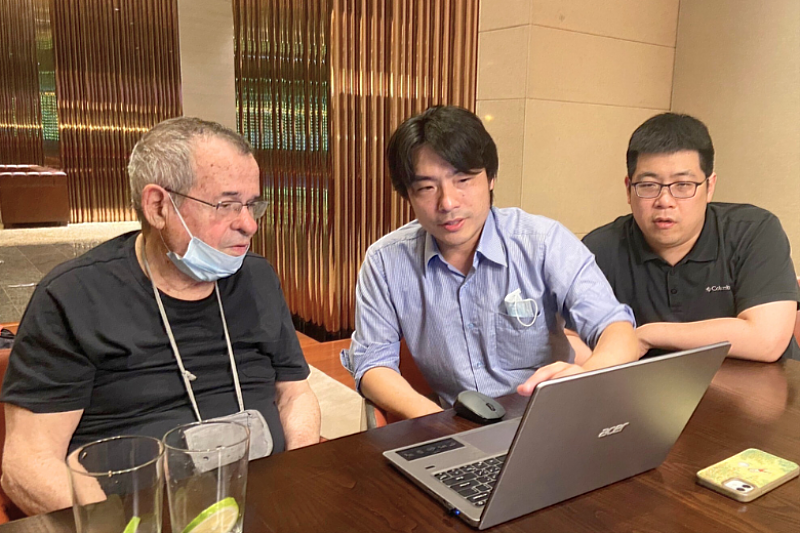
“The function of a protein is governed by its three-dimensional structure,” Lo explained. “Accurately predicting and comparing these structures has long been a central question in biological science.”
When Google DeepMind’s AlphaFold2 revolutionized structure prediction in 2020, researchers finally had a powerful tool for estimating protein shapes from amino-acid sequences. But the breakthrough created an unexpected problem: AlphaFold’s large-scale predictions triggered a thousandfold surge in the availability of protein structures, placing unprecedented computational pressure on global bioinformatics research.
The scientific community urgently needed a next-generation algorithm—one capable of ultra-fast, large-scale structure comparison.
SARST2 answers those needs.
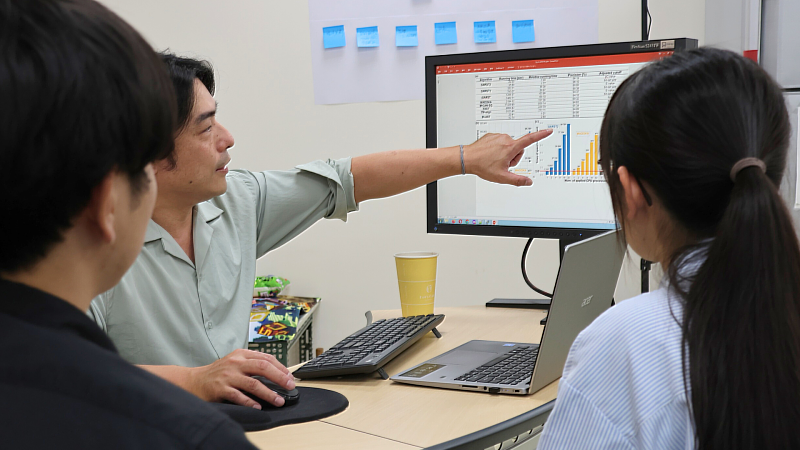
Lo’s team combined artificial intelligence with structural computing techniques to build an algorithm that can scan and compare vast structural datasets hundreds to tens of thousands of times faster than previous tools, while using significantly less memory and disk space. Despite its efficiency, SARST2 performs on par with the latest international algorithms.
Nobel Chemistry Prize winner Arieh Warshel, a pioneer of computational enzymology and mentor to NYCU’s former College of Engineering and Biotechnology dean, Professor Cheng-Gang Huang, played a direct role in the project.
Lo, who was introduced to computational biology through Huang, still refers to Warshel with respect as his academic “grand-mentor.” After sharing the early algorithm concept with Warshel in 2022, Lo received strong encouragement—and soon, the NYCU team began holding monthly online meetings with the Nobel Laureate.
The collaboration not only strengthened the research, Lo said, but also fulfilled a personal mission: “I have always hoped to train students who can become future leaders. Allowing them to learn directly from a Nobel Prize master dramatically widens their global perspective and academic sensitivity.”
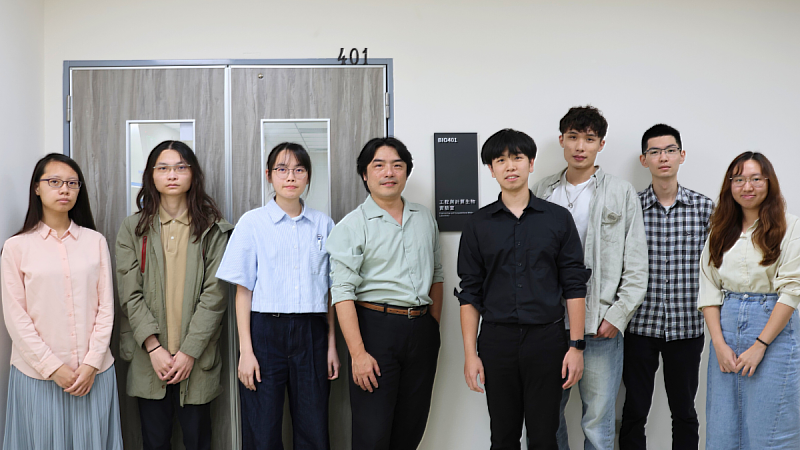
Despite the global scale of the problem, Lo emphasized that his team worked under extremely modest conditions.
“We’re like a group of people wearing straw sandals,” he joked. “We compete with international teams that have massive servers and high-end data centers—yet we do it using home-assembled desktop PCs and a local-brand cooling fan with a broken casing.”
Even so, the team produced results strong enough for Nature Communications—a testament to Taiwan’s resilience and computational biology talent.
The achievement also caught the attention of industry partners. Altos Computing Inc., a subsidiary of Acer Group, stepped forward to provide high-performance Altos AI servers, helping the team establish a stable and efficient remote computing environment for future development.
NYCU and Altos hope to accelerate collaborative innovation in quantum bioinformatics, biomedical big-data analytics, and protein-based drug discovery—strengthening Taiwan’s global competitiveness in information science, biotechnology, and medicine.