

- New Taipei Metro and NYCU Partner to Advance AI-Driven Smart Rail Operations
- NYCU to Establish AB-BNCT Center to Expand Taiwan’s Cancer Precision Medicine Capacity
- NYCU and NTOU forge a strategic alliance to strengthen Taiwan’s blue-technology resilience
- NYCU International Volunteer Programs Strengthen Community Engagement Across Asia Through Education and Health Services
- NYCU GIA Student to Represent Taiwan at AYDA Awards Global Finals
NYCU Advances Taiwan–Japan Semiconductor Co-Creation at SEMICON Japan and Strategic Investment Forums
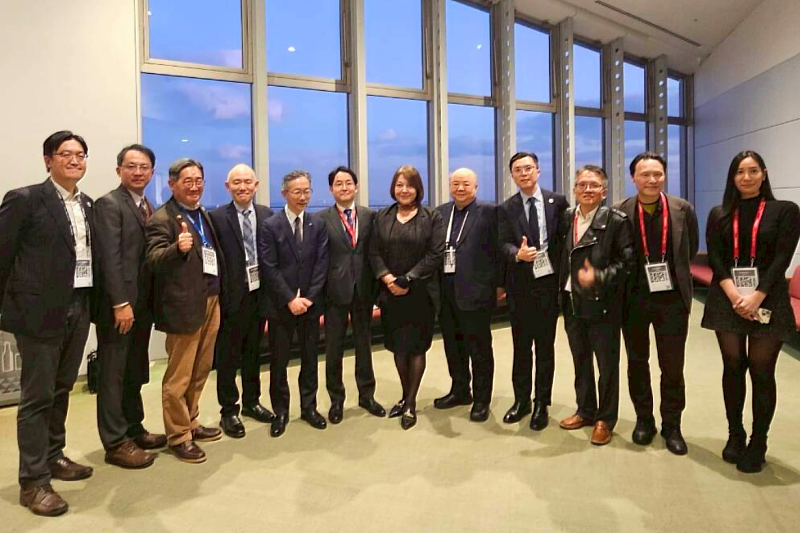
(中央社訊息服務20260114 15:35:29)National Yang Ming Chiao Tung University (NYCU) has taken a significant step toward building a Taiwan–Japan semiconductor co-creation ecosystem by concluding a four-day delegation visit to Tokyo from December 16 to 19, 2025. The mission focused on translating long-standing bilateral goodwill into concrete, project-driven collaboration across research, industry, talent, and investment.
Centered on the concept that semiconductor competitiveness today depends on ecosystems rather than single technologies, the NYCU delegation engaged senior leaders from the Japanese government, industry, academia, and finance. The visit elevated Taiwan–Japan cooperation from informal exchanges to what participants described as “joint engineering” — a shared framework for turning scientific strength and industrial demand into deployable innovation.
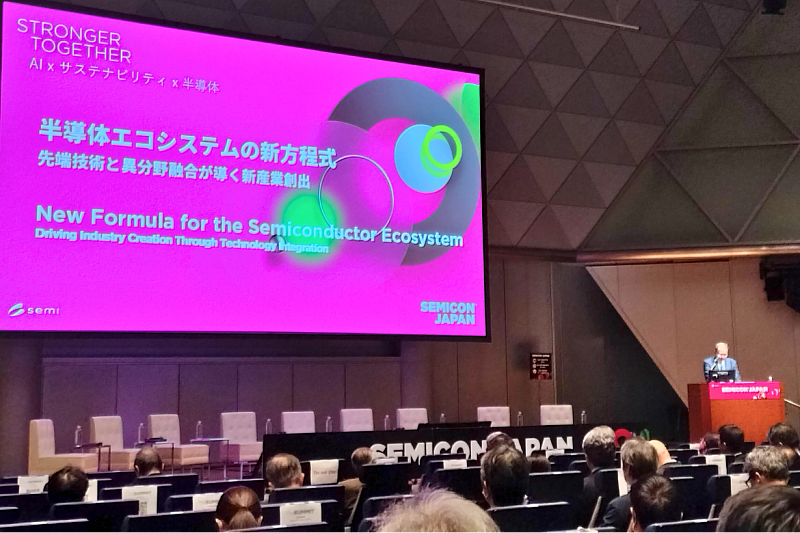
A key highlight of the visit took place on December 19 at SEMICON Japan, where the delegation participated in a high-level symposium hosted by Tohoku University at Tokyo Big Sight. Unlike typical trade-show events, the forum framed semiconductors explicitly as a matter of economic security and national competitiveness, with senior officials from Japan’s Ministry of Economy, Trade and Industry (METI) and Ministry of Education, Culture, Sports, Science and Technology (MEXT) attending alongside industry leaders.
Five major semiconductor companies sent top-tier executives — including chairpersons, presidents, and senior vice presidents — underscoring Japan’s renewed emphasis on rebuilding its semiconductor ecosystem at a systemic level. Participating firms included Rapidus, Kioxia, Tokyo Electron, SCREEN Holdings, and Micron Technology, representing advanced manufacturing, memory, equipment, and global supply-chain perspectives.
Against this backdrop, NYCU representatives articulated Taiwan’s distinctive contributions: rapid mid-to-late-stage technology-readiness-level (TRL) engineering, strong fabless innovation, and the ability to bridge research outcomes and industrial deployment. Discussions converged on four scalable collaboration themes — translating basic science into competitiveness, rebuilding design-service ecosystems through demand pull, co-developing power semiconductors as a shared application focus, and establishing joint talent-development and mobility mechanisms.
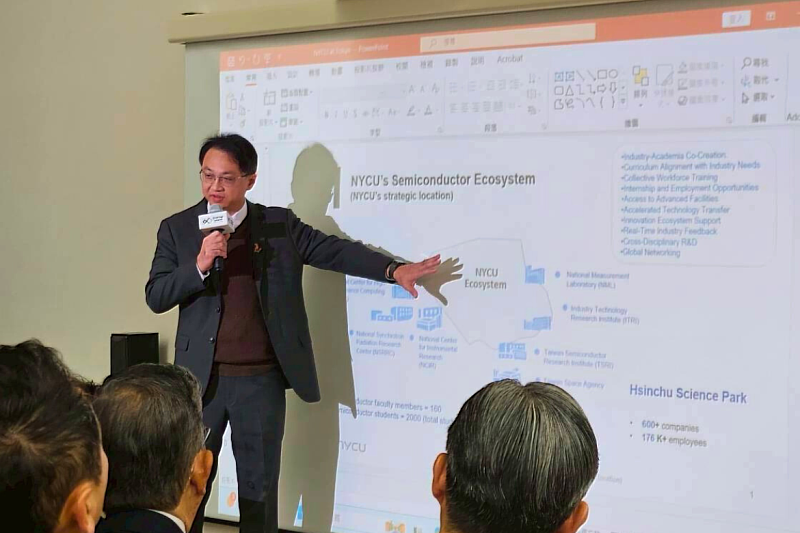
On December 18, NYCU hosted the Taiwan–Japan Semiconductor Innovation and Investment Forum at Startup Island Taiwan’s Tokyo Hub, positioning co-creation not only as a technical agenda but as an investable proposition. Designed as a working forum rather than a ceremonial event, the gathering brought together NYCU’s Taiwan–Japan Exchange Office (TJEO), its international semiconductor collaboration platform, and university-affiliated investment entities, along with industry leaders and former executives from Japan’s automotive and semiconductor sectors.
Forum discussions were structured around four pillars: More-than-Moore technology collaboration, fabless and IC design partnerships, energy-related and power semiconductor applications, and next-generation talent cultivation. By placing research, industrialization, talent, and strategic capital at the same table, the forum offered Japanese partners a clearer picture of how Taiwan–Japan cooperation could move from concept to executable projects.
Former INCJ Chairman and former Nissan COO Toshiyuki Shiga, who attended the forum, remarked on Japan’s need to overcome what he described as “illusory innovation,” expressed interest in learning from Taiwan’s faster, engineering-driven commercialization models, and indicated plans for a follow-up visit to Taiwan in early 2026.
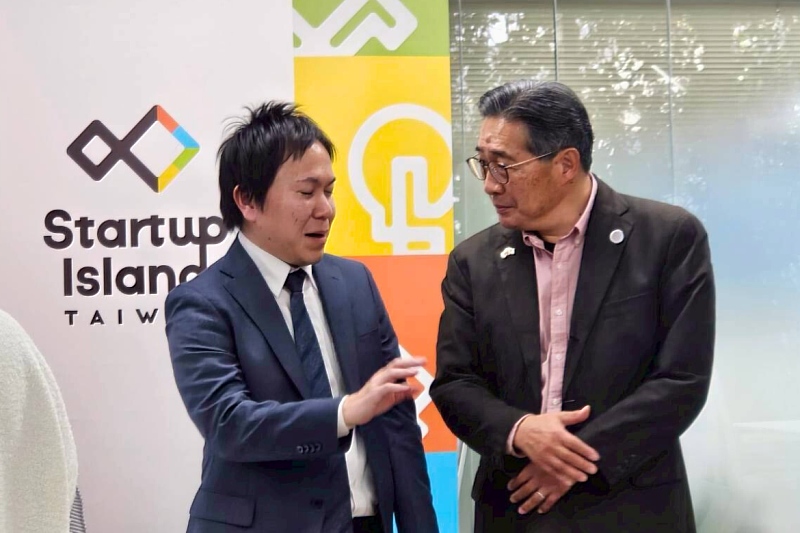
Beyond public forums, the delegation held a series of closed-door meetings with major Japanese financial institutions, including Daiwa Securities VC, 77 Bank, MUFG, and DBJ-affiliated investment partners. These discussions aimed to demonstrate the maturity and feasibility of the proposed Taiwan–Japan Semiconductor Impact Fund by presenting concrete pipeline cases rather than abstract strategies.
One such case featured a power semiconductor startup founded by NYCU alumni, showcasing a “virtual IDM” model that integrates design, manufacturing coordination, and application development. The example illustrated how Taiwan’s speed-driven innovation model could complement Japan’s manufacturing depth and talent base, particularly in power electronics — a field both sides identified as a promising area for joint growth.
The Tokyo visit marked a transition point in Taiwan–Japan semiconductor relations: from episodic exchanges to a sustained co-creation mechanism anchored by cross-border pilot projects and aligned investment strategies. By establishing shared language, trust, and operational frameworks among universities, corporations, and financial institutions, the university aims to turn strategic dialogue into long-term collaboration with global relevance.