




- NYCU to Install Taiwan’s First Human 7-Tesla MRI, Opening a New Era for Brain Science Research
- NYCU Team Develops High-Efficiency Distributed Propulsion VTOL UAV
- NYCU Partners with Stanford and Leading U.S. Universities to Send Students into Silicon Valley Labs
- Eight NYCU Professors Receive NSTC Outstanding Research Award
- NYCU Congratulates Prof. M.C. Frank Chang on Receiving the 2025 John Fritz Medal
NYCU and MUFG Convene Taiwan–Japan–India Semiconductor Conference to Strengthen Regional Value Chains
(中央社訊息服務20260309 15:07:46)National Yang Ming Chiao Tung University (NYCU) and Mitsubishi UFJ Financial Group (MUFG) jointly hosted the “MUFG × NYCU Semiconductor Conference in Taiwan” on Feb. 24 in Hsinchu, bringing together industry leaders, policymakers, and academic experts from Japan, Taiwan, India, and across the Asia-Pacific region.
The hybrid event attracted more than 450 participants, both online and in person, focusing on how global semiconductor partners can build more interconnected, resilient regional value chains amid the ongoing restructuring of the global chip industry.

A central theme of the forum was the emerging trilateral cooperation model among Japan, Taiwan, and India in the semiconductor sector.
Participants noted that Japan’s strengths lie in capital and advanced manufacturing equipment, while Taiwan serves as a key ecosystem integrator, connecting supply chains and innovation networks. India, meanwhile, offers rapidly expanding engineering talent and a workforce in motion, positioning the country as an important emerging partner in the global semiconductor landscape.
Speakers emphasized that supply-chain resilience must go beyond manufacturing capacity and investment. Sustainable competitiveness, they argued, will require closer collaboration in industry-linked education programs, hands-on training, and cross-border talent exchange, ensuring that human capital and innovation remain at the core of long-term growth.
The conference also highlighted the role of financial institutions and cross-border platforms as key catalysts for regional cooperation. MUFG shared its experience connecting investment resources and industrial partners across the Asia-Pacific region, including its support for major semiconductor investment projects in India, illustrating how financial institutions can accelerate supply-chain partnerships and the development of new production capacity.
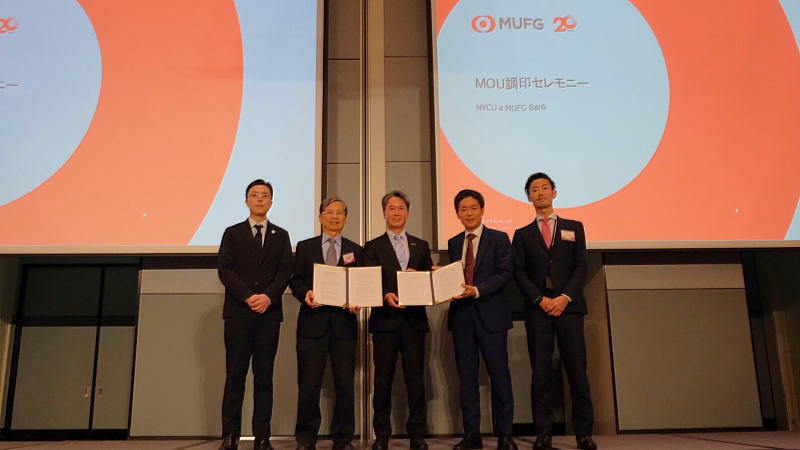
During the conference, NYCU and MUFG also announced the signing of a Memorandum of Understanding (MOU) to deepen collaboration between academia and the financial sector.
The partnership will focus on semiconductor talent development, industry–academia innovation, and sustainable development initiatives. By combining MUFG’s financial expertise and global investment networks with NYCU’s strengths in semiconductor research and education, the collaboration aims to further strengthen Taiwan–Japan strategic cooperation and expand engagement with partners across the broader Asia-Pacific region.
Looking ahead, NYCU aims to position itself as a global platform for cross-border industry–academia collaboration, enabling more efficient flows of capital, talent, and innovation.
Building on Taiwan’s longstanding reputation for reliable partnerships and supply-chain integration, the university seeks to expand international collaboration and transform Taiwan’s semiconductor leadership into a scalable regional value network that benefits partners across the Indo-Pacific.