




- Yunlin Good Products and Shin Hu Farm bring Taiwan’s first aquaponics strawberries to 7-ELEVEN
- Yunlin County government’s smart agricultural transformation initiative delivers positive results
- County government and industry join forces for Kouhu wetland conservation
- Yunlin County Government advances international agricultural expansion through strategic engagement in the Middle East
- Youth Industry Management and Experience Sharing Event inspires the next generation of young farmers in Yunlin
Yunlin launches ‘31 Schools × 31 Sites’ project to advance farm-to-table food and agriculture education
(中央社訊息服務20260529 17:30:03)The Yunlin County Government continues to deepen its promotion of food and agriculture education. On May 7, County Magistrate Chang Li-shan (張麗善), along with Deputy County Magistrate Hsieh Shu-ya (謝淑亞), Director of the Agriculture Department Wei Sheng-te (魏勝德), Director of the Education Department Chiu Hsiao-wen (邱孝文), General Manager of the County Farmers’ Association Chen Chih-yang (陳志揚), and County Councilor Chen Fang-ying (陳芳盈), announced the launch of the “Food and Agriculture Education Site Integration with School Catering Project.” This project, comprising “31 schools × 31 sites,” comprehensively connects local agriculture with the school catering system, creating a new “from farm to table” model for food and agriculture education. The school catering program will run from Apr. 17 to May 15, and is expected to benefit over 22,000 students, showcasing Yunlin’s educational strength and local advantages as a major agricultural county.
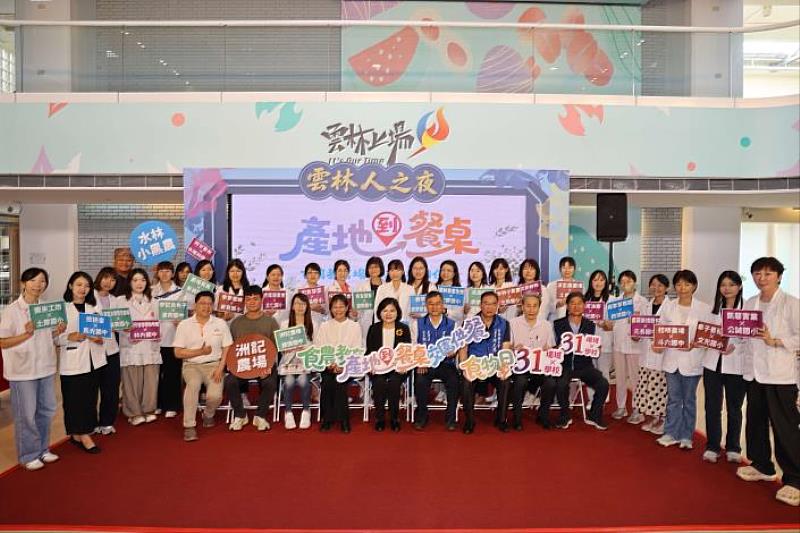
County Magistrate Chang stated that Yunlin County is Taiwan’s granary, largest livestock and fruit and vegetable center, and also the kitchen of all Taiwanese people, playing a crucial role in food safety and food security. As a major agricultural production base in Taiwan, the Yunlin County Government has actively promoted food and agriculture education for many years, gradually establishing a comprehensive foundation from localizing school lunches and building food and agriculture facilities to integrating interdisciplinary curricula. This initiative further integrates agricultural and educational resources, enabling children not only to “eat locally” but also to “understand locally,” recognizing the value of agriculture and environmental sustainability through their daily diet.
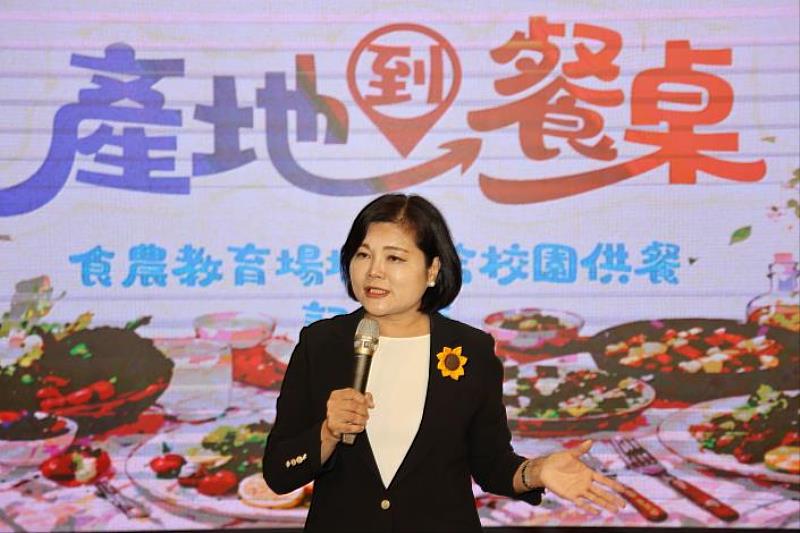
County Magistrate Chang pointed out that by combining food and agriculture facilities with school lunch programs, and through balanced diets and nutritional planning designed by nutritionists, children can enjoy a very nutritious and healthy lunch every day. In addition, with food and agriculture education, the goal is to ensure that children know where and how every bite of food they eat comes from. This is not just about food education, but also about recognizing and cherishing the land. Yunlin is not only a major agricultural county, but also a model county for food and agriculture education.
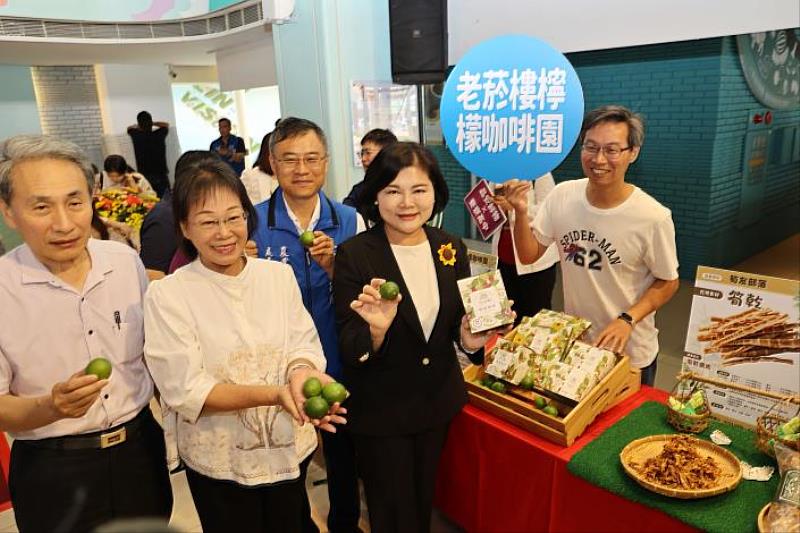
Deputy County Magistrate Hsieh also stated that health comes from what we eat, and Yunlin County has the conditions to provide the most seasonal and fresh ingredients. Living locally and eating seasonally is a unique blessing of Yunlin County. She looks forward to a new model of food and agriculture education “from farm to table” to implement Yunlin’'s agricultural preventive medicine that promotes health through eating.
The county government's Agriculture Department pointed out that school lunches not only meet students' nutritional needs but are also an important learning tool. By transforming lunches into "learnable teaching materials," local farmers are invited to the school to share the source of ingredients and the production process. During mealtimes, they introduce the characteristics and nutritional value of the day's ingredients, allowing students to cultivate correct dietary concepts in their daily lives.
Meanwhile, most consumers only see the final appearance of the ingredients on their tables, but are less aware of the challenges farmers face in the production process, including climate change, cultivation management, crop adaptability, ecological changes, and market price fluctuations, all of which directly affect farmers' livelihoods. Through food and agriculture education, students can learn about the hard work and risks behind agriculture from a young age, thereby learning to cherish food and cultivating a sense of support for local agriculture and care for small farmers.
Agriculture Department Director Wei stated that this project, jointly promoted with the Education Department, adopts a deep cooperation model of “one school, one venue.” Thirty-one schools are paired with 31 local food and agriculture venues, encompassing farms, processing plants, farmers’ associations, and specialty agricultural producers. Through a precise matching mechanism, long-term and stable cooperative relationships are established. Each venue provides ingredients and teaching resources based on its expertise, while schools integrate them into their curriculum for thematic teaching and menu design. This ensures that each school has its own unique local food and agriculture learning content, shaping a campus food education model with local characteristics.
In addition, the plan also establishes a stable and traceable supply chain, with nutritionists designing localized menus, which are then prepared in collaboration with the school’s culinary team. The plan integrates four main themes—nutrition, processing, carbon footprint, and food waste management—into school lunches, allowing students to extend their understanding of food beyond just eating to environmental and sustainability issues, thus cultivating holistic food literacy. Furthermore, the plan strengthens the connection between teaching content and practical application through site visits, in-school instruction, and collaborative preparation with teachers.
Participants in the food and agriculture field sharing session, including Shuilin Small Holder (水林小黑農農場) and Chi Chen-chieh (紀紳傑), one of the top 100 young farmers, also said, “The food and agriculture education field combined with the school catering program gives us farmers, who spend a lot of time in the fields, a rare opportunity to enter the school. In the process of interacting with the children, we have also gained a lot of inspiration, such as how to make agricultural products understandable to children in a simple and easy-to-understand way, and how to let children make them by hand. We also take this opportunity to let children understand what the farmers around them are growing and what their specialties are. The children even share the knowledge they have gained from the school’s food and agriculture education with their parents. Sometimes we also receive feedback and purchases from the children’s parents, which opens up a bridge for further communication.”
The Agriculture Department further stated that establishing a correct understanding of food miles and local diets relies on continuous education and advocacy. Through diverse activities such as food and agriculture education courses, farm visits, and food and agriculture lectures, students can understand the process of food from production to table, as well as the environmental impact of transportation. This further bridges the gap between consumers and producers, transforming “knowing food” into practical actions of “supporting local,” and implementing sustainable diet and environmental education.
County Magistrate Chang emphasized that the county will continue to expand the achievements of food and agriculture education and integrate it with school meal policies. A free nutritious lunch program is expected to be implemented starting this September, reducing the financial burden on families while providing students with higher-quality, safer, and locally sourced meals. Through the local supply chain and food and agriculture education model established through this “31 schools x 31 sites” initiative, it is hoped that its application in the free lunch program will be further deepened in the future, allowing children to “eat with peace of mind” while also “learning solidly,” continuously fulfilling the goals of supporting local agriculture and promoting sustainable education.