




- NYCU and University of Arizona Launch Talent and Innovation Hub to Advance Semiconductor and AI Collaboration
- NYCU Connects the Next Generation Through Semiconductor Film Screening and Dialogue
- Global Health Leaders Are Heading to NYCU for the GCIEM 2026 Global Summit
- Taiwan’s Ministry of Sports and NYCU IAPS Launch Global Call for ASPN Sports Tech Accelerator Cohort 3
- NYCU Self-Healing Functional Fabric to Weave an Eco-Friendly, Sustainable Future
NYCU and National Chiayi University Join Forces to Build Taiwan’s Smart Herbal Medicine Value Chain
(中央社訊息服務20260204 15:04:59)In support of Taiwan’s national initiative to develop a “Herbal Medicine Technology Island,” National Yang Ming Chiao Tung University (NYCU) has partnered with National Chiayi University (NCYU) to advance the modernization of traditional herbal medicine. NYCU President Chi-Hung Lin recently led a delegation from the College of Medicine to NCYU for an academic exchange focused on Chinese medicine research and industry collaboration.
The two universities announced plans to integrate NYCU’s strengths in smart healthcare and clinical evidence-based research with NCYU’s long-established expertise in medicinal plant cultivation and agri-food innovation. The partnership aims to construct a comprehensive value chain for Taiwan’s herbal medicine sector, spanning genetic resource preservation, intelligent cultivation, and clinical application.
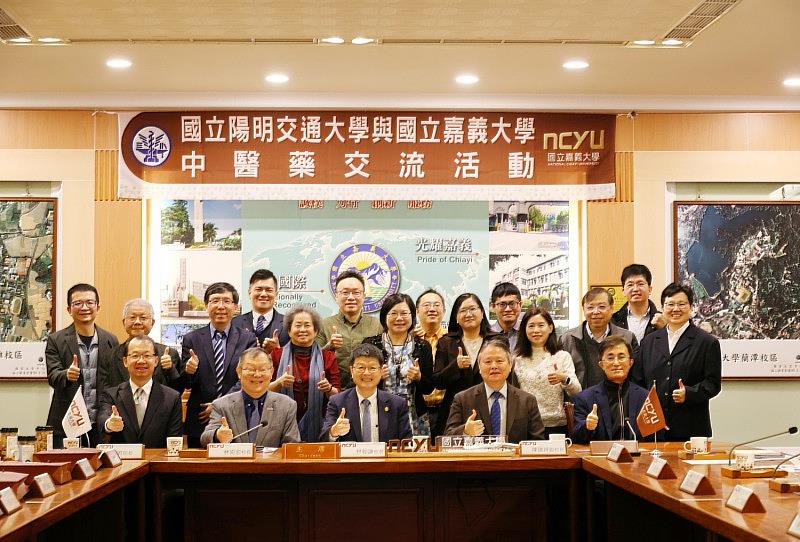
NCYU President Han-Chien Lin said the university’s herbal medicine research team has been supported by Taiwan’s Higher Education Sprout Project and the Ministry of Health and Welfare’s medicinal plant cultivation program. These initiatives have enabled breakthrough progress in the research and applied development of native medicinal plants.
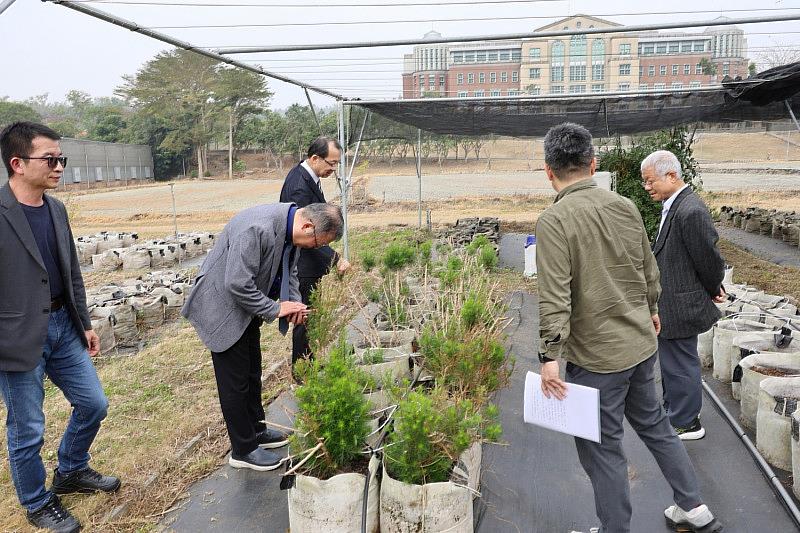
An interdisciplinary team from NCYU’s Colleges of Life Sciences and Agriculture has introduced Internet of Things and sensor technologies to develop smart cultivation systems for medicinal herbs, including mint, Houttuynia cordata, Artemisia capillaris, and Agrimonia pilosa. These systems help stabilize the quality of active compounds in herbal materials.
The team has also established germplasm preservation frameworks for rare medicinal plants, including Taiwanese pepper and Atractylodes. Research findings have been successfully commercialized into products such as anti-fatigue turmeric kombucha and multiple traditional herbal tea blends, demonstrating the university’s capacity to translate academic research into market-ready innovations.
NYCU President Chi-Hung Lin emphasized that the university began admitting students to its School of Chinese Medicine in the 2024 academic year, becoming the first national university in Taiwan to establish such a department. The program is designed to train a new generation of practitioners who combine scientific thinking with engineering backgrounds.
“The future of Chinese medicine lies in scientific validation,” Lin said. “By integrating molecular medicine, neuroscience, and artificial intelligence, we aim to build rigorous clinical evidence for traditional therapies. High-quality, traceable, and standardized herbal materials are essential foundations for clinical research and new drug development.”
According to NCYU President Han-Chien Lin, Taiwan’s herbal medicine industry is at a critical turning point as the global natural health sector expands and competition intensifies under the WTO framework. The collaboration represents a strategic “medical–agricultural integration” alliance.
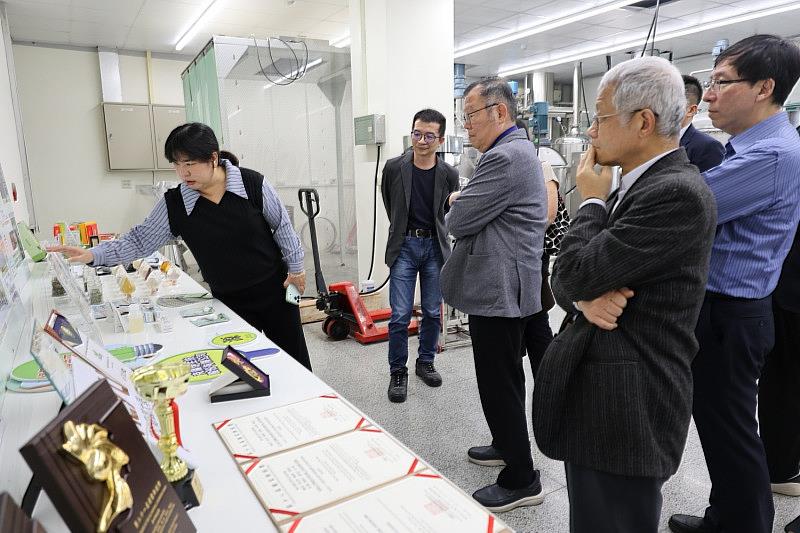
Under the partnership, NCYU will focus on upstream breeding of high-quality plant varieties and standardized smart cultivation aligned with Good Agricultural Practice (GAP) principles to ensure safety and quality. NYCU will lead downstream efforts in pharmacological mechanism analysis, clinical trials, and smart medical applications, creating a tightly connected industry model linking production and clinical innovation.
Both universities expressed hope that the collaboration will gradually reduce Taiwan’s long-standing reliance on imported herbal materials and cultivate cross-disciplinary professionals who understand plant cultivation, pharmacology, and clinical applications.