




- NYCU and NTHU Share Overall Title at the 58th Mei-Chu Games
- NYCU Launches Digital “Introduction to Chinese Medicine” Course for High School Students Across Taiwan
- NYCU Students Win Global Championship at JAXA’s Kibo-RPC Space Robotics Programming Challenge
- NYCU and MUFG Convene Taiwan–Japan–India Semiconductor Conference to Strengthen Regional Value Chains
- NYCU to Install Taiwan’s First Human 7-Tesla MRI, Opening a New Era for Brain Science Research
NYCU Leads Smart City Innovation Hub, Advancing AI-Driven Urban Governance with Global Partners
(中央社訊息服務20260318 14:47:46)National Yang Ming Chiao Tung University (NYCU) is spearheading a new model for smart city development, bringing together universities, industry leaders, and government agencies to accelerate the deployment of artificial intelligence in urban governance.
At the 2026 Smart City Summit & Expo, NYCU joined forces with National Taiwan Ocean University, National Chung Cheng University, and National Ilan University to showcase more than 20 cutting-edge AI-powered technologies. The exhibition, curated by NYCU under the theme “Smart Convergence: Advancing Urban Evolution,” opened on March 17 and drew high-profile visitors, including Vice President Hsiao Bi-khim and senior officials from the Ministry of Transportation and Communications.
The joint exhibition spans smart healthcare, intelligent buildings, low-carbon ocean technology, and smart manufacturing — demonstrating how universities are translating research into scalable, real-world applications.
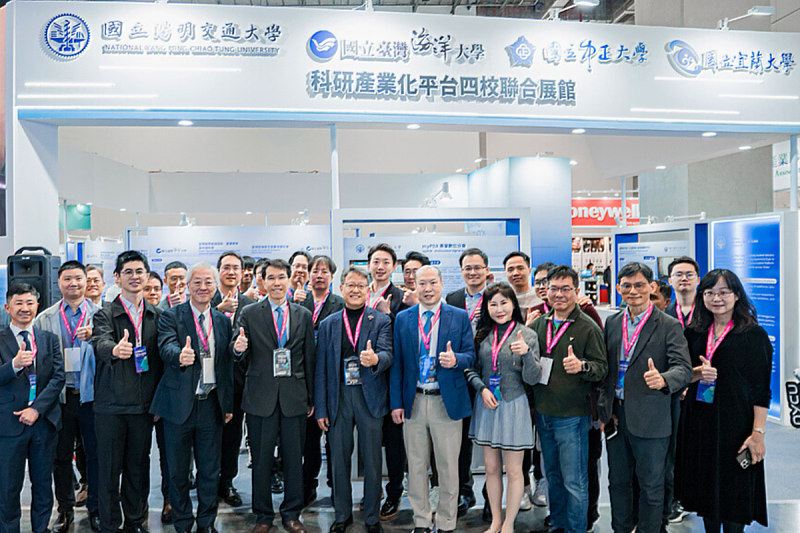
NYCU Senior Vice President Ta-Sung Lee said the exhibition goes beyond a display of technological achievements, positioning the university as a platform for industry–academia co-creation.
“Our goal is to move innovation from laboratories into urban environments,” Lee said, pointing to the university’s Shilin building and its research commercialization platforms as key infrastructures. “By connecting enterprises, government agencies, and international partners, we are building a globally competitive ecosystem for smart city innovation.”
NYCU has been actively fostering international collaboration, working closely with leading institutions in Japan, including Kyushu University, Tohoku University, and Hokkaido University. These partnerships aim to attract global capital, talent, and technology to Taiwan while accelerating the development and deployment of smart city solutions.
“Competition in smart cities is no longer defined by technology alone,” said Hank Huang, NYCU Vice President for Industry–Academia Co-creation. “It is increasingly about the strength of integrated ecosystems shaped by cities, industries, and universities working together.”
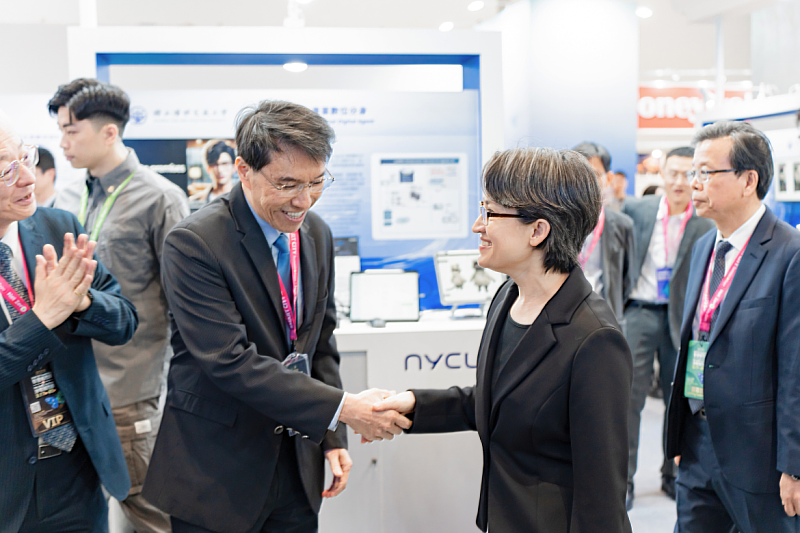
A key highlight of the opening day was the “AI Smart City Governance Forum,” organized by NYCU, which brought together policymakers, industry leaders, and academic experts.
The forum featured two panel discussions. The first focused on real-world industrial applications of AI in urban settings, with speakers including officials from Taiwan’s Small and Medium Enterprise and Startup Administration and executives from leading technology companies.
The second panel explored how cities can leverage their unique characteristics through industry–academia collaboration, with participation from Taiwan’s Ministry of Digital Affairs and partner universities.
Discussions centered on how smart cities are evolving from isolated technological deployments to integrated, city-scale systems — and emphasized the critical role universities play in connecting policy, industry, and local innovation.
NYCU also unveiled its Shilin building as an international innovation hub co-developed with leading enterprises.
The site integrates smart building technologies, data platforms, and co-creation mechanisms, serving as both a showcase for smart city solutions and a living laboratory for future urban applications. The initiative underscores the university’s emerging role as a key node in city-level innovation.
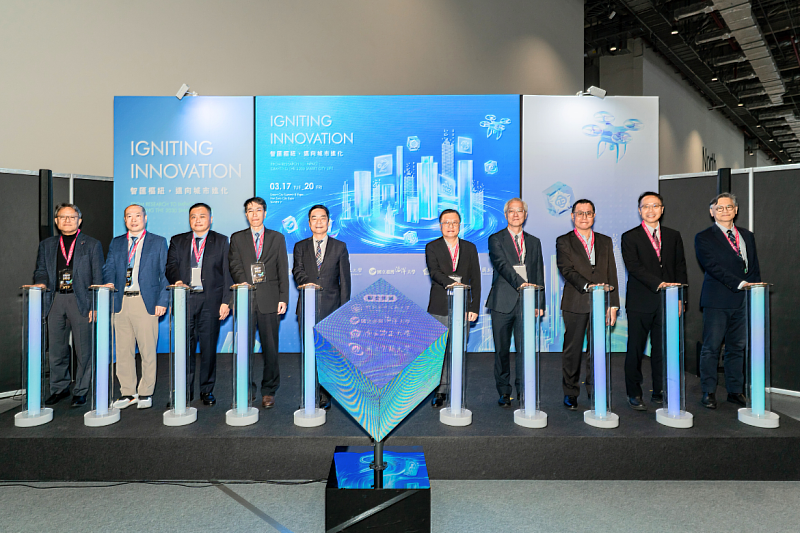
Among NYCU’s featured innovations were seven technologies with strong commercialization potential.
These include an automated closed-system stem cell cultivation platform, jointly developed with Japan’s CiRA Foundation, a world-leading regenerative medicine institute, significantly improving efficiency in stem cell research.
The university also presented myPDA, a generative AI-powered digital agent developed by its AI Systems Center, designed to support smart manufacturing and enterprise governance.
In healthcare, NYCU teams showcased AI-enabled solutions, including XR-based digital dental training tools and a personalized rehabilitation platform developed by the InsightMed Diagnostics team, addressing clinical and health management needs.
International collaborations were also highlighted. Startups, including B-Box and Quon Energy, are working with NYCU on geothermal and biomass technologies aligned with global net-zero goals. Meanwhile, Professor Mitsuru Tanaka of Kyushu University presented the next-generation mass spectrometry platform GRAMS, with applications ranging from non-invasive cancer detection to rapid food quality analysis.
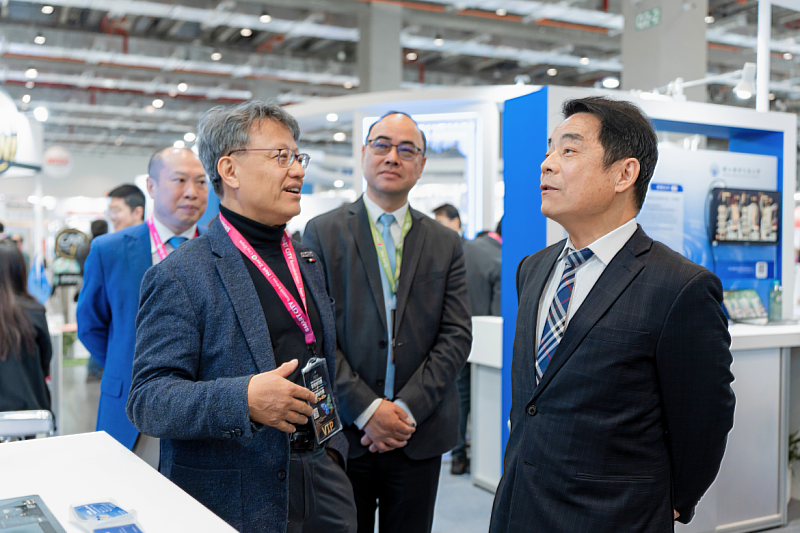
As cities worldwide confront challenges from digital transformation to climate change, NYCU’s initiative reflects a broader shift: universities are no longer just centers of knowledge, but active drivers of urban innovation.
By integrating research, industry collaboration, and real-world experimentation, NYCU is positioning itself — and Taiwan — at the forefront of next-generation smart city development.