




- NYCU Marks 5th Anniversary with Opening Ceremony at Bo-Ai Campus, Showcasing Renewal and Future Vision
- NYCU Awards Honorary Doctorate to Renowned Photonics Scientist Jia-Ming Liu
- NYCU Professors Honored with Prestigious Awards for Breakthroughs in Brain and Liver Research
- NYCU Builds One of Taiwan’s Most Complete Virtual Campuses in Minecraft
- NYCU Partners with GWOXI and PODAK to Advance Automated Stem Cell Manufacturing Platform
NYCU Hosts GCIEM Summit as Global Experts and Industry Converge on Engineering Medicine and AI
(中央社訊息服務20260416 14:14:59)Leading experts in engineering medicine gathered in Taipei last weekend as National Yang Ming Chiao Tung University (NYCU) hosted the Global Consortium of Innovation and Engineering in Medicine (GCIEM) Summit 2026. Originally launched by the University of Illinois Urbana-Champaign, the summit entered its second edition with NYCU taking the lead as host—highlighting the university’s growing role in integrating medicine, engineering, biotechnology and data science on a global stage.
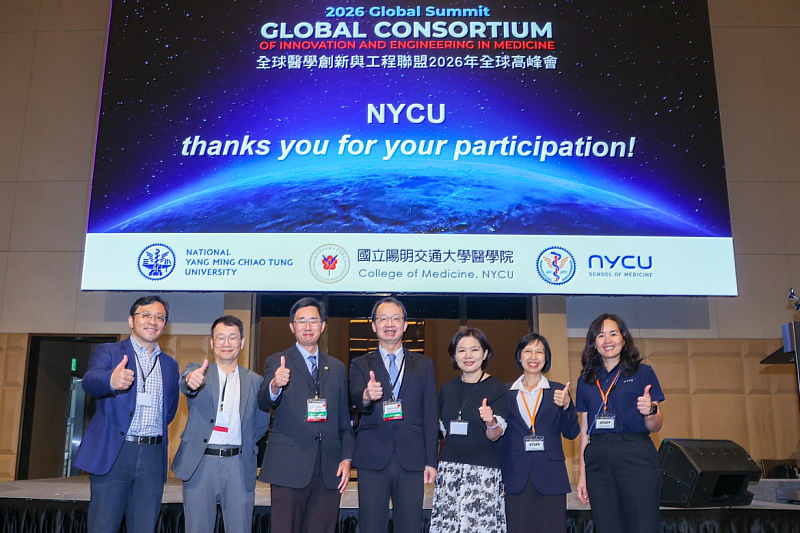
The summit brought together scholars, clinicians and industry leaders to explore how interdisciplinary collaboration is reshaping modern healthcare.
“Healthcare can no longer rely solely on traditional medicine,” said Shuu-Jiun Wang, Dean of NYCU’s College of Medicine. “Facing aging populations and rising chronic disease burdens, the future lies in integrating medicine with engineering, life sciences and artificial intelligence.”
NYCU President Chi-Hung Lin emphasized that future physicians must go beyond clinical expertise. “Doctors today must be equipped to understand and apply emerging technologies in real clinical settings,” he said.
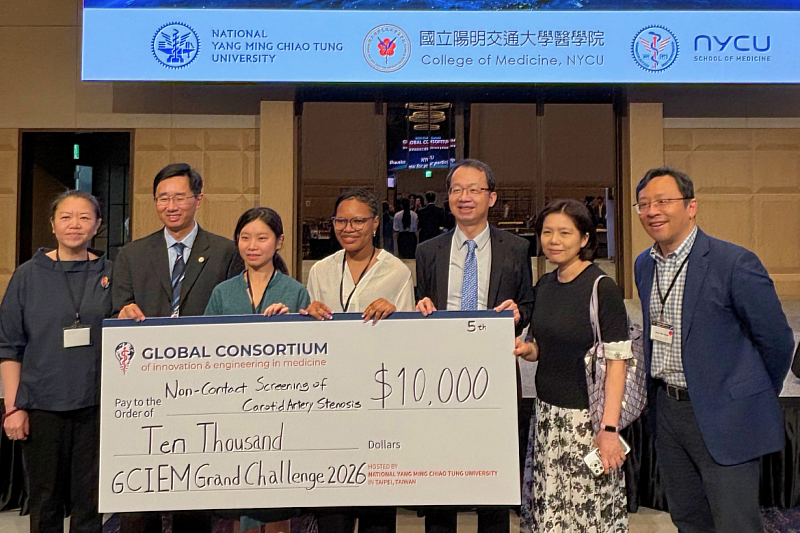
A key feature of the summit was the inaugural student innovation competition in medicine, engineering and AI, held in Taiwan for the first time.
An NYCU medical student team placed fifth with its project, a non-contact carotid artery stenosis detection system. The technology uses standard camera imaging combined with signal processing to analyze blood flow patterns—allowing early detection without specialized medical equipment. The system’s accessibility and low deployment threshold point to broader applications in preventive healthcare and remote diagnostics.
NYCU noted that hosting GCIEM reflects Taiwan’s shift from traditional medical training toward a more integrated model of engineering medicine.
“Hosting this summit is not just about international exchange—it is about demonstrating a systematic approach to cultivating interdisciplinary talent,” said Albert Chih-Chieh Yang, Chair of NYCU’s Department of Medicine and Director of Digital Medicine Center.
The university has introduced a physician-engineer training track within its six-year medical program, combining clinical education with engineering and information science to prepare students for future healthcare challenges.
The summit also highlighted NYCU’s close collaboration with Taipei Veterans General Hospital (TVGH), reinforcing a strong ecosystem that connects research, clinical practice and technological development.
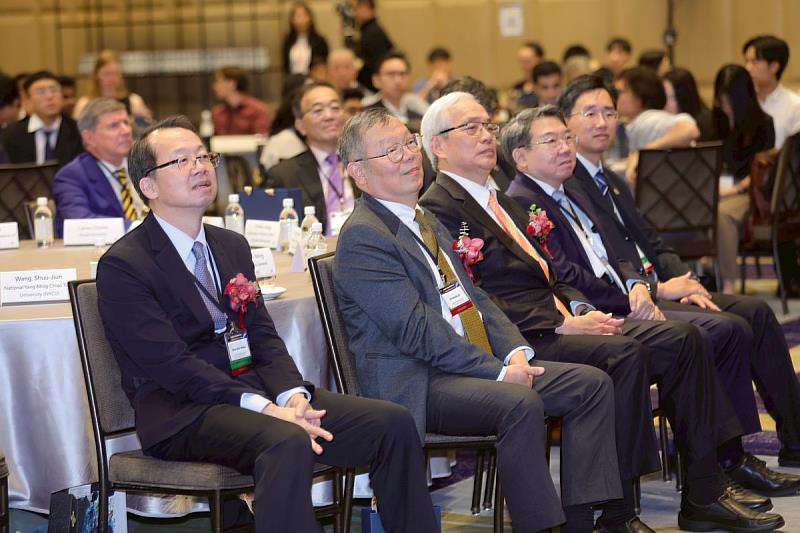
Discussions at the summit pointed to the evolving role of AI—from diagnostic assistance to deeper integration into clinical workflows. Experts stressed that AI should support, not replace, physicians, while improving efficiency and reducing risk in areas such as imaging and critical care.
At the same time, trust and reliability remain central challenges. Speakers emphasized that real-world validation and cross-disciplinary collaboration will be key to advancing medical AI safely and effectively.
Industry participation—including ASUS—also reflected Taiwan’s strengths in data, system integration and rapid implementation, helping accelerate the translation of innovation into clinical practice.
For NYCU, hosting GCIEM 2026 represents a significant milestone in elevating Taiwan’s international presence in engineering medicine.“
Through this platform, the world can see Taiwan’s capabilities in smart healthcare and interdisciplinary innovation,” Yang said.
As healthcare continues to evolve alongside AI and digital technologies, NYCU aims to play a leading role in shaping a more integrated, efficient and human-centered future for medicine.