




- NYCU Develops Humidity-Resistant Catalyst to Tackle Ozone Pollution in Subtropical Climates
- NYCU Marks 5th Anniversary with Opening Ceremony at Bo-Ai Campus, Showcasing Renewal and Future Vision
- NYCU Hosts GCIEM Summit as Global Experts and Industry Converge on Engineering Medicine and AI
- NYCU Awards Honorary Doctorate to Renowned Photonics Scientist Jia-Ming Liu
- NYCU Professors Honored with Prestigious Awards for Breakthroughs in Brain and Liver Research
Taiwan–U.S. Biomedical Collaboration: NYCU and NHRI Co-host with UC Irvine to Advance Big Data in Tumor Biology and Immunology
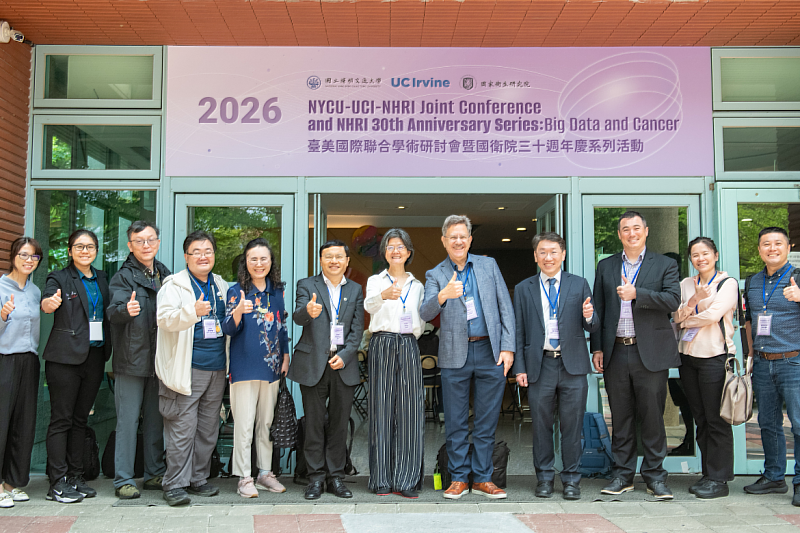
(中央社訊息服務20260422 16:25:04)The “Taiwan–U.S. International Joint Symposium & NHRI 30th Anniversary Series: Big Data and Cancer,” co-organized by the Cancer and Immunology Research Center of National Yang Ming Chiao Tung University (NYCU) and the Institute of Molecular and Genomic Medicine of National Health Research Institutes (NHRI), was successfully held on April 10, 2026, at the HO YING TSAI Memorial Hall, Shou-Ren Building, Yangming Campus of NYCU. The event brought together leading experts from NYCU, NHRI, and the University of California, Irvine (UC Irvine) for in-depth discussions on key areas including precision medicine, immunotherapy, and big data analytics.
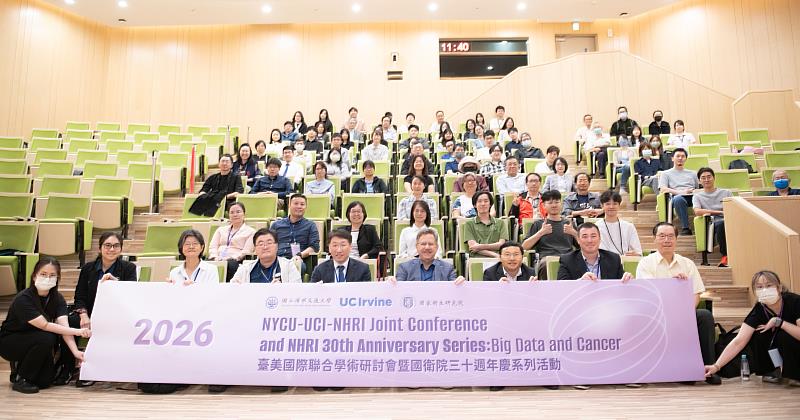
The strong academic ties between NYCU’s Cancer and Immunology Research Center and UC Irvine date back to late 2024, when Professor Xing Dai from UC Irvine’s Department of Biological Chemistry, School of Medicine, was invited to deliver a lecture at NYCU. In 2025, Senior Vice President Muh-Hwa Yang, the Center's Director, was also invited to visit UC Irvine and deliver a lecture. Since then, ongoing academic exchanges have facilitated a research partnership in cancer biology and precision medicine. This solid foundation has helped catalyze the organization of this Taiwan–U.S. joint symposium. It reflects a shared long-term commitment to advancing next-generation oncology research and developing innovative strategies for cancer treatment. Additionally, since Professor Su-Hao Lo, a Yushan Scholar of the Cancer and Immunology Research Center, assumed the position of Director of the Institute of Molecular and Genomic Medicine at the National Health Research Institutes, he has actively strengthened collaboration and connections between NYCU and NHRI. Coinciding with the 30th anniversary of the National Health Research Institutes, the two institutions have jointly organized this symposium to deepen academic exchange and celebrate this significant milestone together.
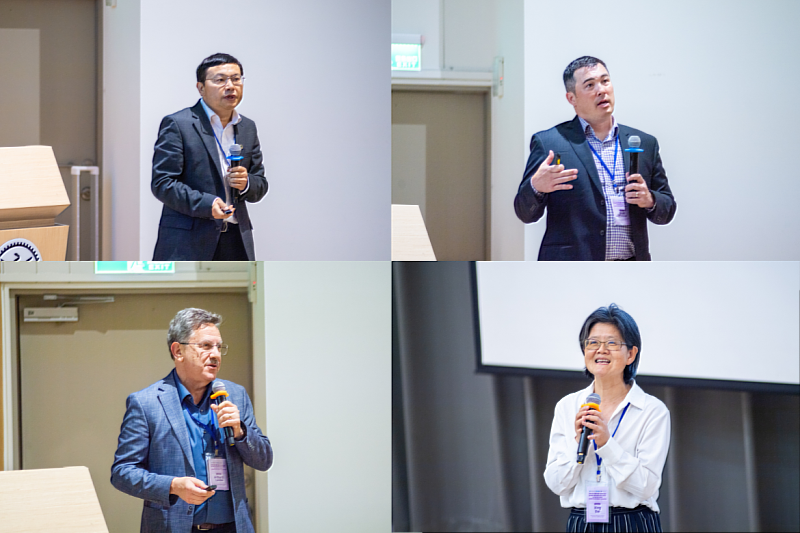
The symposium program is closely aligned with cutting-edge developments and clinical challenges in cancer research. In the first session, Professor Jianhua Yu (Department of Medicine, School of Medicine, UC Irvine) presented the latest advances in innate immune cell therapies and herpesvirus-based oncolytic virotherapy for cancer treatment. Professor Nien-Jung Chen of NYCU discussed how the interaction between calnexin and TREM1 enhances tumor antigen presentation and promotes anti-tumor T cell activation. Associate Investigator Mingzi Zhang from NHRI introduced the applications and potential of chemoproteomics in data-driven drug discovery. Chair Professor Mu-Hwa Yang of NYCU delivered a talk titled “Precision oncology beyond convention: uncovering hidden drivers and adaptive resistance,” highlighting novel cancer drivers and their roles in therapeutic resistance.
The second session expanded the discussion of the tumor microenvironment and therapeutic strategies. Professor Scott Atwood (Department of Developmental and Cell Biology, UC Irvine) presented an in-depth analysis of the dynamic regulatory mechanisms underlying tumor recognition and regression in basal cell carcinoma. Associate Professor Szu-Ting Chen of NYCU discussed her research on how novel non-TLR pattern recognition receptors on dendritic cells regulate antigen fate and influence CD8⁺ T cell activation. Assistant Investigator En-Chi Hsu from NHRI shared recent progress in developing diagnostic and therapeutic antibodies targeting CD98⁺ cancer cells, highlighting their potential for precision medicine.
The third session centered on the theme of “Big Data and Cancer.” Professor Arthur D. Lander, Director of the Center for Complex Biological Systems at UC Irvine, delivered a keynote titled “Big Data and Cancer: What are we capturing; what are we missing?”, offering critical insights into the capabilities and limitations of big data in cancer research. Assistant Investigator Ya-Hsuan Chang from NHRI presented data-driven discoveries in human disease research, integrating precision oncology reporting, spatial analysis, and disease susceptibility. Finally, Associate Professor Chun-Yu Lin from NYCU introduced network-based strategies for precision medicine, demonstrating how omics data can be leveraged to decode individualized disease characteristics and advance clinical translation.
Through this in-person academic exchange, researchers from the three participating institutions—NYCU and NHRI in Taiwan, and UC Irvine in the United States—engaged in close discussions, not only showcasing their collaborative achievements in cancer biology and biomedical informatics, but also fostering new opportunities for international collaboration and innovation. Looking ahead, the Cancer and Immunology Research Center at National Yang Ming Chiao Tung University will continue to strengthen research partnerships and academic exchanges with leading global institutions, jointly advancing next-generation precision medicine and biomedical science innovation.