




- NYCU Uses AI and Semiconductor Education to Support Ukrainian Students Reimagine the Future
- NYCU, Academia Sinica, and NTHU Develop “EcoDecibel” Sensors to Map Urban Noise in Real Time
- NYCU Brings Gamified Precision Elderly Care to Hsinchu in New AI-Powered Healthy Aging Initiative
- NYCU and Yang Ming Marine Transport Launch AI Partnership for Smart Shipping and Sustainable Supply Chains
- NYCU Study Links IVF Births to Higher Risk of Congenital Heart Disease in Children
NYCU AI Team Ranks Among Top Five Worldwide in CVPR 2026 Deepfake Detection Challenge
(中央社訊息服務20260602 16:31:29)As deepfake technology becomes increasingly sophisticated, manipulated images and videos are emerging as a growing threat to public trust, elections, national security, and everyday online communication. In response to this challenge, a research team at National Yang Ming Chiao Tung University (NYCU) has developed a free AI-powered platform that helps users quickly assess the authenticity of suspicious images and videos, providing a practical tool in Taiwan's fight against misinformation.
The platform, known as "Co-Insight AI Eye", was developed by the Advanced Computer Vision Laboratory (ACVLab) led by Associate Professor Chih-Chung Hsu of NYCU's College of Artificial Intelligence. The underlying technology recently demonstrated its international competitiveness by securing 5th place in the Robust Deepfake Detection Challenge, held in conjunction with the IEEE/CVF Conference on Computer Vision and Pattern Recognition (CVPR) 2026, one of the world's premier computer vision conferences.
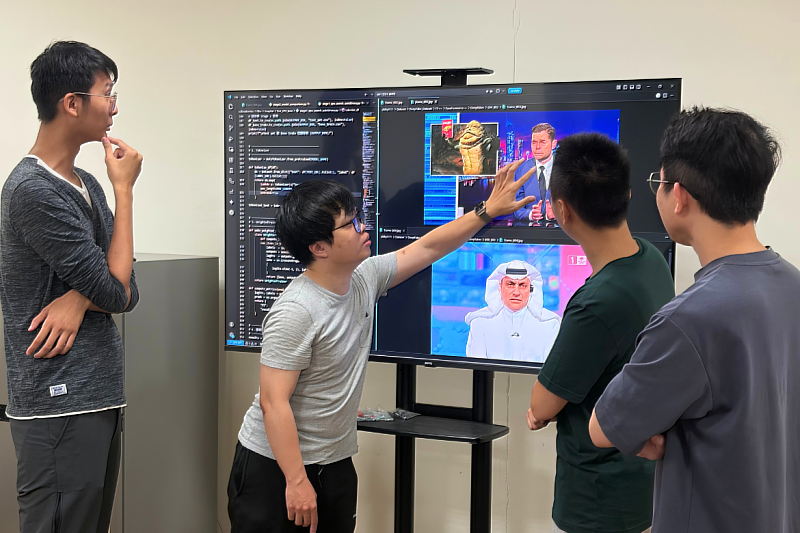
This year's challenge attracted 337 researchers from around the world, who collectively conducted more than 5,000 model evaluations and optimizations, making it one of the largest and most competitive challenges hosted at CVPR 2026.
NYCU's team outperformed entries from several internationally renowned institutions, including the University of Illinois Urbana-Champaign, Michigan State University, Trinity College Dublin, and Mohamed bin Zayed University of Artificial Intelligence.
According to Hsu, while the top four teams relied on model ensembles or large-scale AI systems with up to seven billion parameters, the NYCU team achieved a top-five global ranking using a single model containing approximately 500 million parameters—roughly one-tenth to one-fourteenth the size of competing systems.
"The result demonstrates that innovative algorithm design can overcome limitations in computational resources," Hsu said. "It highlights the ability of Taiwanese academic researchers to compete internationally through originality and technical ingenuity rather than sheer computing power."
A key innovation behind the team's success is a framework known as Quality-aware Mixture-of-Experts, designed to maintain detection accuracy even when images or videos have undergone repeated sharing, compression, screenshotting, or other forms of quality degradation.
Such robustness is increasingly important in real-world scenarios, where manipulated content often circulates across multiple social media platforms before reaching users. Traditional detection systems often struggle when image quality deteriorates, but the NYCU approach remains effective under such challenging conditions.
The technology's practical applicability extends beyond academic benchmarks, making it suitable for media verification, online content moderation, and public-sector security applications.
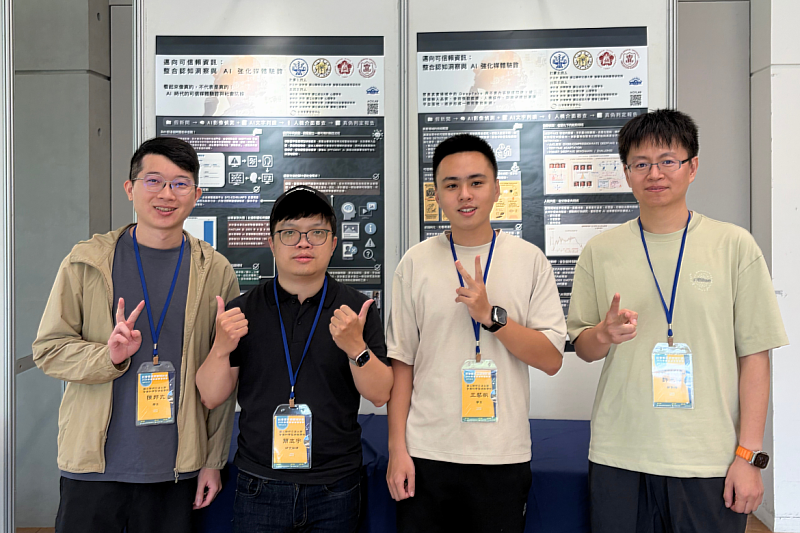
Beyond international competitions, NYCU's research team has actively translated its technology into tools for society.
The Co-Insight AI Eye platform is freely accessible to the public, journalists, and fact-checking organizations. The team has collaborated with multiple organizations focused on fact-checking, digital literacy, public governance, and national security.
Among these collaborations is work with the Taiwan FactCheck Center (TFC), where the technology supports AI image forensics and verification reports, as well as consultation on deepfake video analysis. The team also works with Doublethink Lab to establish early-warning mechanisms for information manipulation and foreign influence operations.
In addition, the researchers have engaged in technical exchanges with Taiwan's investigative and law-enforcement agencies, including the Investigation Bureau, Ministry of Justice, the National Police Agency, and the Institute for Information Industry, helping strengthen applications in criminal investigation, cybersecurity, and national security.
As generative AI continues to evolve, the ability to distinguish authentic content from synthetic manipulation has become a global challenge.
For NYCU researchers, success is measured not only by international rankings but also by societal impact. By combining cutting-edge computer vision research with real-world deployment, the team is helping strengthen Taiwan's resilience against misinformation while demonstrating how artificial intelligence can serve the public good.
From fact-checking news reports to supporting national security efforts, NYCU's deepfake detection technology underscores AI's growing role as a safeguard for information integrity in the digital age.