




- NYCU Joins Taiwan Regenerative Medicine Alliance to Advance Next-Generation Healthcare
- NYCU Brings AI and Autonomous Vehicle Research to Penghu to Advance Smart Island Governance
- NYCU Vulpes Racing Takes Third Place at Formula Student Taiwan, Sets Sights on Japan
- NYCU Students Win World Championship at IEEE Hardware Computing Competition
- NYCU’s iGEM Team Wins Gold, Adding New Momentum to Global Evolution
NYCU Brings Global Nursing Leaders Together to Explore the Future of Healthcare in the AI Era
(中央社訊息服務20260716 10:24:35)As healthcare systems worldwide confront aging populations, rapid advances in artificial intelligence, and increasingly complex patient needs, nursing is entering a period of profound transformation. To explore how the profession can respond to these changes, the College of Nursing at National Yang Ming Chiao Tung University (NYCU) hosted the International Symposium: Nursing Leadership in the Era of Complexity on June 30, bringing together internationally recognized scholars from the University of California, Los Angeles (UCLA), The Hong Kong Polytechnic University, and the University of Sydney.
Bringing together scholars, clinicians, researchers and students from Taiwan and overseas, the symposium explored how technological innovation, interdisciplinary collaboration and educational reform are reshaping the competencies required of future nursing professionals.
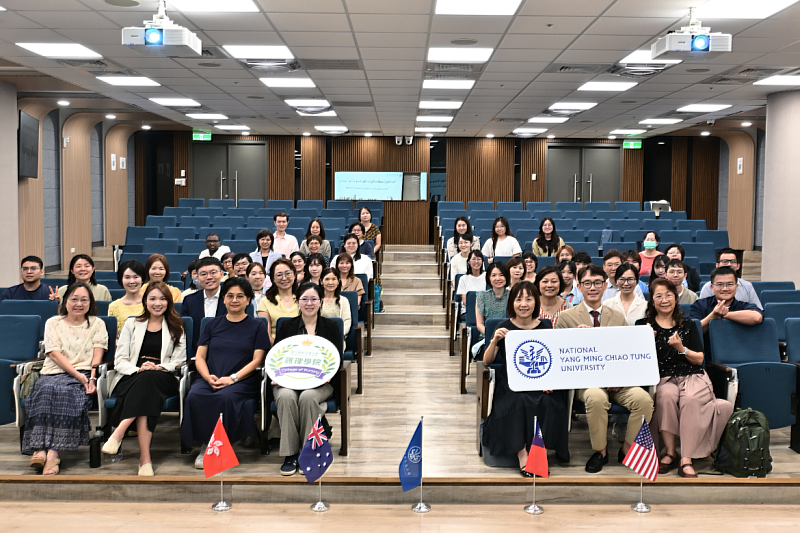
At the symposium, Professor Li-Yin Chien, Dean of NYCU’s College of Nursing, said the rapid evolution of healthcare systems and AI technologies presents both unprecedented challenges and new opportunities for the nursing profession.
She emphasized that the symposium was designed to strengthen international collaboration while encouraging fresh thinking across nursing education, research and clinical practice. By fostering partnerships with leading universities worldwide, NYCU aims to cultivate nursing professionals with global perspectives, leadership capabilities and the interdisciplinary skills needed to advance sustainable healthcare.
Throughout the symposium, speakers explored how technological innovation, interdisciplinary collaboration and educational reform are reshaping the competencies expected of future nursing professionals.
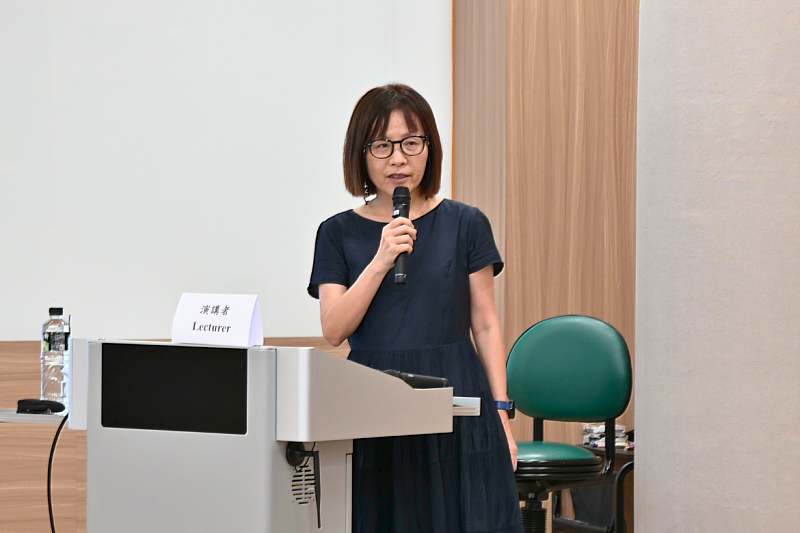
The keynote address was delivered by Professor Wei-Ti Chen of the UCLA School of Nursing, who spoke on “Leading Beyond Complexity: The Future of Nursing in a Connected World.”
Drawing on her extensive work in global health, chronic disease management and health equity, Chen argued that nursing leadership today extends well beyond clinical expertise. As healthcare systems become increasingly interconnected, future nursing leaders must also develop cross-cultural communication skills, collaborate across disciplines, and embrace emerging technologies.
She stressed that international partnerships and the open exchange of knowledge will be essential to improving healthcare quality and advancing health equity globally.
The second keynote, “From Zero to One: What Capabilities Our Future Nurses Need to Be Equipped with under the Current AI Wave?”, was presented by Dr. Vivian Hui from The Hong Kong Polytechnic University.
Hui examined how artificial intelligence is transforming clinical care, nursing education and research. She argued that tomorrow’s nurses will need far more than traditional clinical knowledge. Digital literacy, data analysis, critical thinking and effective human-AI collaboration will become core professional competencies.
Using real-world healthcare examples, Hui demonstrated how AI is already supporting patient care and clinical decision-making. She encouraged nursing educators to integrate AI into curricula so graduates can confidently navigate the era of intelligent healthcare while maintaining the human-centered values that define the profession.
The symposium concluded with a keynote by Dr. Jung-Jae Lee from the University of Sydney, titled “Evolving Nursing Education Research: Rigor and Innovation.”
Lee highlighted emerging directions in nursing education research, emphasizing that educational innovation should be grounded in rigorous evidence. He discussed how advances in research methodology, curriculum design and simulation-based learning can strengthen both educational quality and clinical outcomes.
Looking ahead, Lee advocated for greater investment in interdisciplinary collaboration, digital technologies and international academic exchange. These approaches, he said, will help prepare future nurses with strong clinical judgment, leadership abilities and a commitment to lifelong learning.
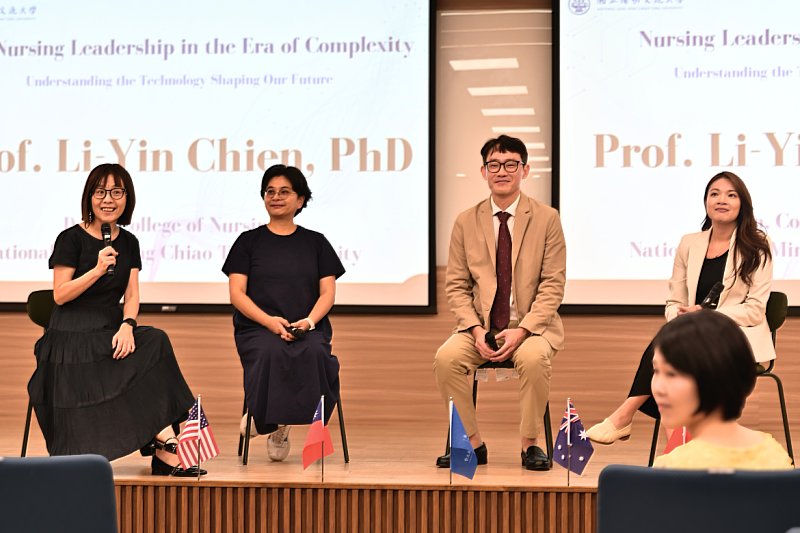
The symposium concluded with an interactive panel discussion, during which speakers and participants exchanged perspectives on artificial intelligence, global health, nursing education and the evolving competencies required of healthcare professionals.
NYCU’s College of Nursing said it will continue to expand international academic partnerships and foster collaborative research and educational initiatives with leading institutions worldwide. Through sustained global engagement, the college aims to broaden students’ international perspectives, accelerate innovation in nursing education, and prepare graduates to lead the next generation of healthcare both in Taiwan and beyond.