

- NYCU and National Chiayi University Join Forces to Build Taiwan’s Smart Herbal Medicine Value Chain
- NYCU and University of Arizona Launch Talent and Innovation Hub to Advance Semiconductor and AI Collaboration
- NYCU Connects the Next Generation Through Semiconductor Film Screening and Dialogue
- Global Health Leaders Are Heading to NYCU for the GCIEM 2026 Global Summit
- Taiwan’s Ministry of Sports and NYCU IAPS Launch Global Call for ASPN Sports Tech Accelerator Cohort 3
NYCU professor Ao-Lin Hsu invited as keynote speaker at Dubai’s Global Longevity Symposium
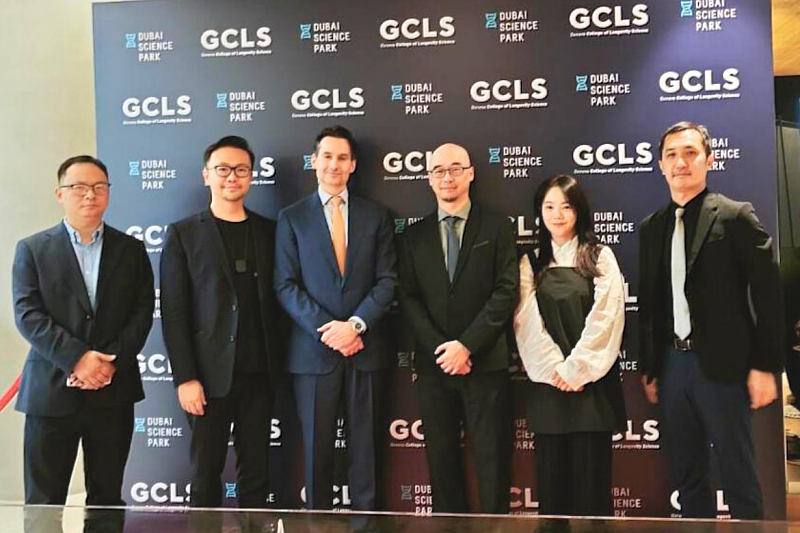
(中央社訊息服務20260205 11:48:22)Taiwan’s research strength in anti-aging and longevity science continues to draw international attention. Professor Ao-Lin Hsu, director of the Institute of Biochemistry and Molecular Biology at National Yang Ming Chiao Tung University (NYCU), was invited to serve as a keynote speaker at the 2026 GCLS Semester Symposium in Dubai — a high-level global forum organized by the Geneva College of Longevity Science (GCLS), widely regarded as a nexus for frontier dialogue on aging science, preventive medicine and translational healthcare.
His presence signals growing recognition of Taiwan’s role in shaping the scientific conversation around longevity, a field increasingly seen as central to the future of global health systems.
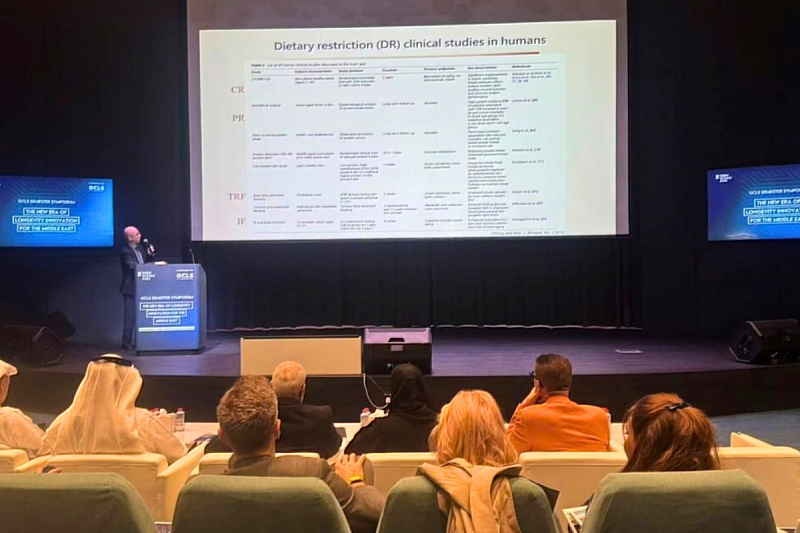
Held February 2–3 at Dubai Science Park, the symposium brought together scientists, health regulators, and industry leaders from Europe, the Middle East, and Asia under the theme “The New Era of Longevity.” Sessions explored topics ranging from molecular mechanisms of aging to AI-driven preventive medicine and governance frameworks for next-generation healthcare.
The forum is designed to close the gap between laboratory discovery and clinical implementation—a transition many experts view as the defining challenge in modern longevity science. By placing basic research alongside policy and industry discussion, organizers framed longevity not as a niche discipline, but as an emerging pillar of global health strategy.
Hsu joined a speaker lineup that included senior officials from Abu Dhabi and Dubai health authorities as well as leading European longevity researchers, positioning Taiwan directly within a high-level exchange shaping how societies prepare for rapidly aging populations.
An internationally recognized aging biologist, Hsu has built his career studying the molecular architecture of lifespan. His laboratory at NYCU uses the microscopic worm Caenorhabditis elegans to map genetic pathways that regulate longevity and cellular stress responses — research that has helped clarify how diet, metabolism, and stress signaling influence aging.
His team’s work identifying the HSF1/HSB1 protein network as a key regulator of aging has appeared in top-tier journals, offering new insight into how organisms maintain resilience under biological stress. At the Dubai forum, Hsu focused on translating these discoveries into preventive frameworks, arguing that longevity science must move from laboratory knowledge to practical health strategies.
As populations age faster than any generation in recorded history, scientists increasingly warn that extending lifespan without extending healthspan will strain healthcare systems worldwide. Hsu’s keynote addressed how molecular biology can inform early intervention and long-term preventive care.
Hsu also serves as vice chair of the Asia-Pacific Association for Precision Anti-Aging Medicine (APPAM), a cross-disciplinary organization that promotes integration among biomedical research, clinical practice, and preventive medicine. Through international collaborations and academic partnerships, the association has become a conduit linking Taiwanese researchers to global longevity networks.
Hsu’s invitation is more than an individual milestone. It reflects the maturation of Taiwan’s biomedical ecosystem and its growing ability to contribute original frameworks to a field historically dominated by Western research institutions.
Aging is rapidly becoming one of the defining challenges of the 21st century. By 2050, the global population over 60 is expected to double, reshaping healthcare systems, economies, and social policy. Longevity science — once a specialized academic pursuit — now intersects with biotechnology investment, public health planning, and national strategy.
Taiwan’s advanced medical infrastructure and strong life science research base position it as an increasingly visible participant in this transformation. For NYCU, Hsu’s appearance on the Dubai stage underscores a broader institutional direction: linking molecular biology, engineering, and clinical science to address the future of human health.
As the symposium concluded, one message resonated across discussions: longevity is no longer a distant scientific ambition. It is an unfolding global project — and Taiwan is now firmly part of the conversation.