




- NYCU and Changhua County Launch Smart Agriculture App to Help Farmers Monitor Crops with AI
- NYCU Study Finds Belly Fat May Signal Hidden Heart Failure Risk—Even at Normal Weight
- Taiwan–U.S. Biomedical Collaboration: NYCU and NHRI Co-host with UC Irvine to Advance Big Data in Tumor Biology and Immunology
- NYCU Develops Humidity-Resistant Catalyst to Tackle Ozone Pollution in Subtropical Climates
- NYCU Marks 5th Anniversary with Opening Ceremony at Bo-Ai Campus, Showcasing Renewal and Future Vision
NYCU Team Wins Taiwan Title at Red Bull Basement, Heads to Silicon Valley for Global Finals
(中央社訊息服務20260430 10:56:21)As artificial intelligence continues to move beyond cloud infrastructure into real-world applications, National Yang Ming Chiao Tung University (NYCU) is once again demonstrating its strength at the intersection of healthcare and information and communication technology (ICT).
At the 2026 Taiwan finals of the global innovation competition Red Bull Basement, a team from NYCU emerged as the national champion. The team, named “EYEFLOW,” was formed by faculty and students from NYCU’s School of Medicine and stood out among competitors spanning fields such as aviation safety and smart agriculture.
Their winning solution—an AI-powered remote home vision testing system—addresses critical pain points faced by frontline clinical staff, earning top honors in Taiwan. EYEFLOW will now represent the country at the global finals in Silicon Valley, where they will compete against leading startups from around the world for a $100,000 investment prize.
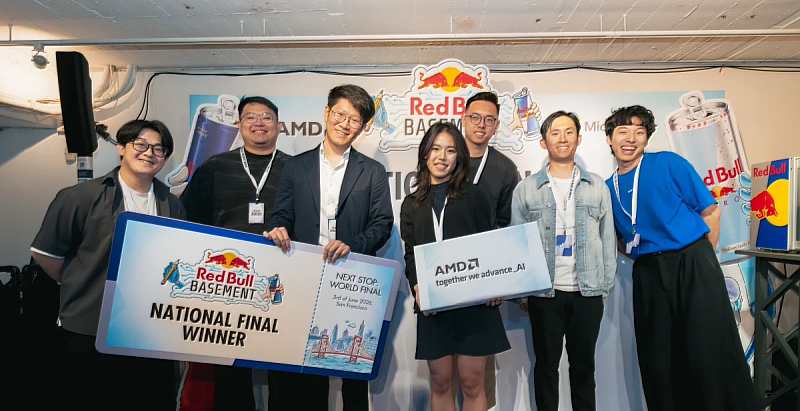
Unlike many early-stage concepts, EYEFLOW’s innovation is rooted in real clinical experience. The team is led by Dr. Kao-Jung Chang, a resident physician and assistant professor in computer science, alongside medical student Chia-Hsin Lu, who brings a strong interest in business development.
Their idea was inspired by firsthand observations in hospitals, where nursing staff are required to perform large volumes of repetitive diagnostic tasks daily. This not only contributes to staff fatigue but also consumes valuable time that could otherwise be dedicated to patient care.
To address this issue, EYEFLOW developed a remote, home-based vision-testing platform that integrates AI analysis with clinical decision support. The system transforms traditional low-frequency outpatient follow-ups into high-frequency home monitoring.
By combining image recognition with a retrieval-augmented generation (RAG) system, the platform can assist in generating portions of clinical reports, accelerate consultation workflows, and stratify patients by risk level. The team estimates that the solution could reduce unnecessary hospital visits by more than 30%.
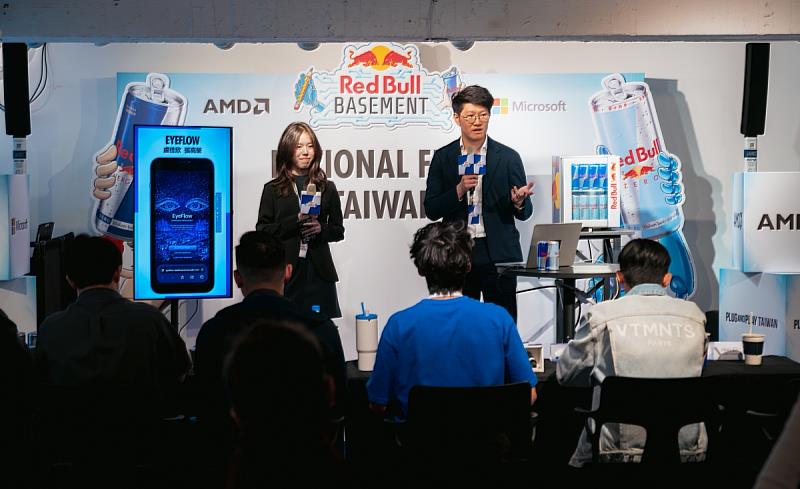
Following their win, EYEFLOW will receive mentorship and resources from leading industry partners, including Plug and Play Taiwan and Microsoft. The team will also be supported with high-performance AI laptops from Advanced Micro Devices (AMD) and access to Microsoft Azure cloud services. These resources will be used to refine their minimum viable product (MVP) ahead of the global finals in Silicon Valley.
Chang noted that healthcare is a universal challenge, and the United States represents the world’s largest healthcare market. He expressed hope that EYEFLOW can leverage NYCU’s interdisciplinary strengths to demonstrate Taiwan’s capabilities in applying AI to healthcare on a global stage.
With its blend of medical expertise and engineering innovation, NYCU continues to position itself at the forefront of translating academic research into real-world impact—now taking that vision to Silicon Valley.