




- NYCU Joins Taiwan Regenerative Medicine Alliance to Advance Next-Generation Healthcare
- NYCU Brings Global Nursing Leaders Together to Explore the Future of Healthcare in the AI Era
- NYCU Brings AI and Autonomous Vehicle Research to Penghu to Advance Smart Island Governance
- NYCU Vulpes Racing Takes Third Place at Formula Student Taiwan, Sets Sights on Japan
- NYCU Students Win World Championship at IEEE Hardware Computing Competition
NYCU and Mackay Memorial Hospital Publish Study on Brainwave Monitoring During General Anesthesia
(中央社訊息服務20260721 18:49:25)When patients undergo general anesthesia, they lose consciousness—but does that also mean the brain stops responding to pain?
A five-year collaborative study by National Yang Ming Chiao Tung University (NYCU) and Mackay Memorial Hospital suggests the answer is more complex. Rather than simply inducing unconsciousness, general anesthesia involves both the suppression of consciousness and the regulation of the brain’s response to noxious stimuli during surgery.
The interdisciplinary research team identified a novel electroencephalography (EEG) biomarker—known as delta–alpha phase-amplitude coupling (PAC)—that was found to more closely reflect changes in brain activity associated with nociceptive processing during surgery than conventional monitoring indices. The findings were published in the April issue of the leading international journal Anesthesiology.
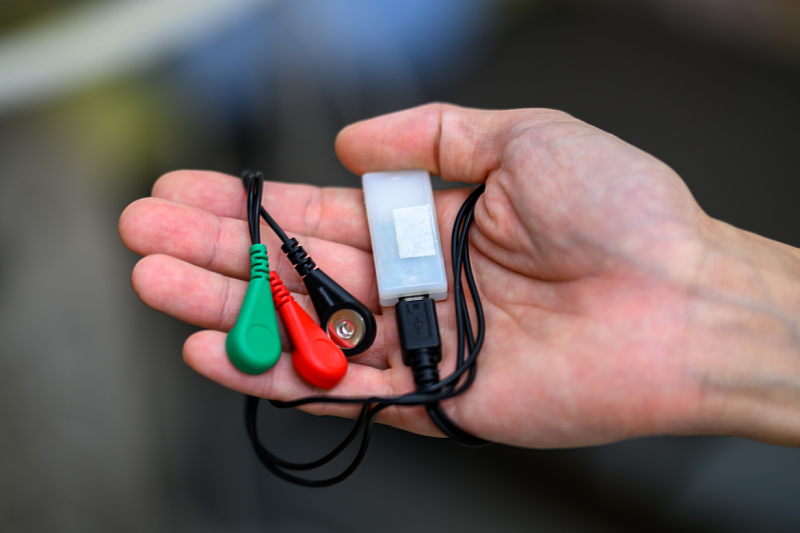
During surgery, anesthesiologists continuously monitor patients while adjusting anesthetic and analgesic medications based on physiological signals and clinical assessment.
Traditionally, these evaluations rely on indicators such as heart rate, blood pressure, pharmacological models, and clinical experience. However, because patients respond differently to anesthesia and surgical stimulation, these measurements do not always provide a direct reflection of the brain’s activity.
The study found that PAC is associated with the balance between nociception—the brain’s processing of harmful stimuli—and analgesia during general anesthesia. The researchers suggest that PAC may serve as an additional physiological indicator for evaluating brain activity during surgery.
The study was supported by a lightweight wearable EEG system developed by Professor Po-Chao Kuo and his team at NYCU’s Institute of Brain Science.
Designed for use in the operating room, the device combines miniaturized hardware with advanced signal-processing algorithms capable of filtering environmental interference while continuously recording high-quality brainwave signals.
According to Kuo, the wearable system enables individualized, real-time monitoring of brain activity, providing continuous physiological data that may complement existing intraoperative monitoring methods. The research also demonstrates the feasibility of applying wearable EEG technology in complex clinical environments.
Dr. Tzu-Chun Wang, senior attending anesthesiologist at Mackay Memorial Hospital and a doctoral researcher at NYCU’s Institute of Brain Science, said precision anesthesia begins with a comprehensive preoperative evaluation.
Before surgery, anesthesiologists assess factors including a patient’s age, medical history, medications, allergies, and the planned surgical procedure to determine an individualized anesthesia strategy. During surgery, physiological monitoring is combined with clinical judgment to guide anesthetic management, while postoperative recovery is supported through Enhanced Recovery After Surgery (ERAS) protocols involving multidisciplinary teams of surgeons, nurses, and nutrition specialists.
The newly identified PAC biomarker provides an additional physiological parameter for investigating the relationship between unconsciousness and nociceptive processing during anesthesia, contributing to a deeper understanding of how the brain responds under general anesthesia.
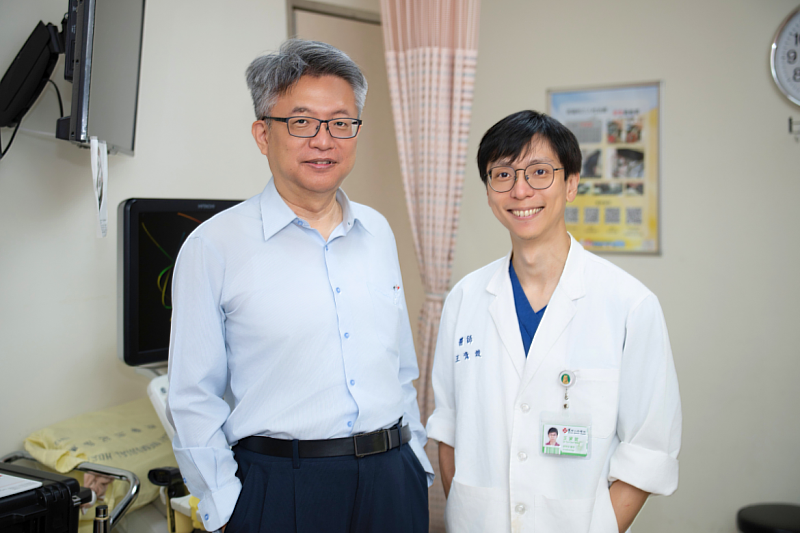
NYCU President Chi-Hung Lin said advances in medical technology continue to expand opportunities for exploring one of science’s greatest frontiers—the human brain.
“This collaboration exemplifies the spirit of Engineering Medicine by bringing together engineering, neuroscience, and clinical medicine,” Lin said. “Through close interdisciplinary collaboration, we are deepening our understanding of brain function and advancing translational research that connects scientific discovery with clinical investigation.”
Mackay Memorial Hospital Superintendent Wen-Han Chang emphasized that anesthesiologists play a critical role throughout surgery, noting that every adjustment in anesthetic medication requires careful clinical judgment supported by professional expertise and continuous patient monitoring.
NYCU and Mackay Memorial Hospital have maintained a long-term partnership spanning anesthesiology, neuroscience, and clinical research, with a focus on translating scientific discoveries into clinical investigation.
Building on the current study, the research team is extending its investigation of wearable EEG monitoring technology to intensive care settings to further explore brain activity monitoring in critically ill patients.
As neuroscience, biomedical engineering, and precision medicine continue to advance, the researchers said their findings provide new insights into brain activity during general anesthesia and establish a foundation for future research on brain-guided monitoring technologies.