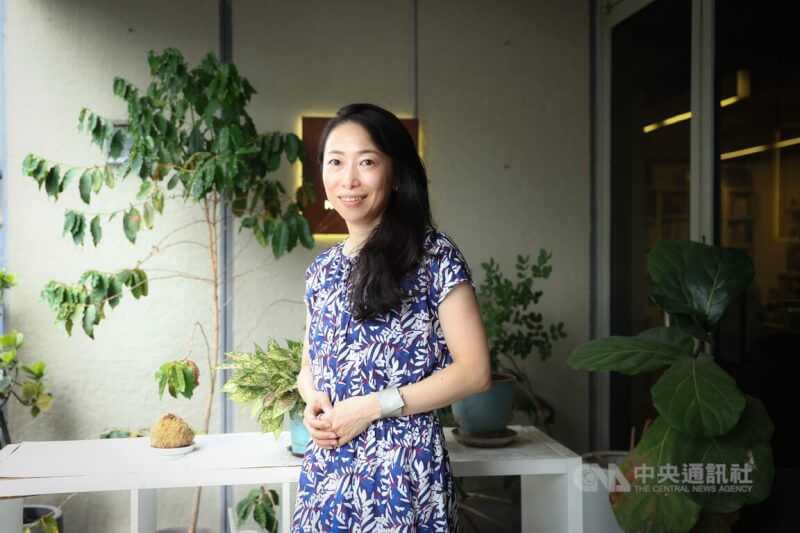
Tae Hitoto, a descendant of the Keelung-based Yen family — one of the five most powerful families in Japanese colonial Taiwan (1895-1945) — appears destined to remain connected to the island.
身為基隆顏家─日治時期(1895–1945)台灣五大家族之一─的後代,一青妙似乎註定與台灣這座島嶼有著不解之緣。
But for the daughter of a Taiwanese father and a Japanese mother, that bond was not inherited — it had to be actively rebuilt.
但對於父親是台灣人,母親是日本人的她而言,這樣的緣分並非與生俱來,而須依靠自己重新建立。
Born in Taipei in 1970, Hitoto immigrated to Japan at 11. Her connection to Taiwan faded further after her father died three years later. It was not until the 2012 publication of her first book, “Box My Child”, a nonfiction account of her father, that her Taiwanese identity began to emerge.
一青妙1970年出生於台北,11歲時移居日本。三年後父親過世,她與台灣的連結漸漸淡化。直到2012年她的第一本著作《我的箱子》─一部描寫對父親的回憶的紀實作品─出版,她的台灣身分意識才逐漸浮現。
The belated realization of the significance of her paternal connection to Taiwan drove Hitoto to delve into her family’s history. As of 2024, Hitoto had written two nonfiction books and four travel books, all of which spotlight Taiwan.
遲來地意識到自己父系血緣與台灣的淵源,促使一青妙深入探索自己家族的歷史。截至2024年,她已出版兩本紀實作品與四本旅遊書,全都聚焦台灣。
Her first novel, “The Blue Flower”, represents her latest effort to get closer to her father. Though composed in Japanese, the novel was first published in Taiwan in July in a Chinese translation, with its Japanese edition scheduled for release in 2026.
她的首部小說《青色之花》是她向父親靠近的最新一次嘗試。雖以日文創作,但中文版率先於今年7月在台灣發行,日文版則預定於2026年發行。
In a recent interview with CNA, Hitoto spoke about what drove her to write about Taiwan, her mental journey in search of lost time, and her commitment to bridging Taiwan and Japan.
近期接受中央社專訪時,一青妙談到了她為何書寫台灣、尋找過去失落時光的心路歷程,以及她致力於連結台灣和日本的信念。
‘My father, my nostalgia’
關於父親,關於懷鄉
Hitoto’s novel follows three women who discover photos of their deceased fathers and embark on a journey to uncover their family histories.
一青妙的小說描寫三名女性在偶然發現已故父親的照片後,展開一段追尋家族歷史的旅程。
Along the way, they uncover stories from the White Terror, a period of authoritarian rule and political repression in Taiwan from 1949 to 1992 that resulted in the death of tens of thousands of people.
過程中,她們揭開了「白色恐怖」時期的故事─那是1949年至1992年間台灣威權統治與政治迫害的年代,數以萬計的人民因此喪命。
The plot, Hitoto said, was based on her study of her family’s past. Each of the six major characters has a real-life model, with two being the author herself and her father.
一青妙表示,小說情節源自她對自身家族歷史的研究。書中六個主要角色皆有真實原型,而其中兩名正是她與她的父親。
“To me, writing always serves as my way to build my connection with Taiwan, and my connection with Taiwan is my dad.”
「對我而言,寫作一直是我與台灣建立連結的方式,而我與台灣的連結,就是我父親。」
In 2009, while preparing to rebuild their family home in Tokyo, Hitoto discovered a box of her father’s belongings. The collection — including photos, notes, and a diary containing the phrase “the thing that cannot be told” — first made her aware of his Taiwanese roots.
2009年在準備整建東京老家時,一青妙偶然發現了一個裝有父親遺物的箱子。箱子裡有照片、筆 記,以及一本寫著「無法言說之事」的日記─這讓她第一次深刻意識到父親深植於台灣的根。
In a 2017 article, Hitoto wrote about her family’s decline in the advent of the Kuomintang government and revealed that her grandfather and an uncle were captured and released. She believes this happened on the condition that the family turn over most of their land — over 60,000 pings (198,348 square meters) — to the government.
在2017年的一篇文章中,一青妙提到自己家族在國民政府來台後逐漸沒落,並揭露她的祖父與叔叔曾被捕,之後獲釋。她相信,這是以家族交出大部分土地─超過六萬坪─為交換條件的結果。
According to Hitoto, her father had studied in Japan but returned to Taiwan following the outbreak of the 228 Incident in 1947, which ushered in the White Terror period, and sneaked back to Japan two years later.
據一青妙所述,她的父親曾赴日求學,但在1947年二二八事件引爆白色恐怖時期後返台,兩年後又偷偷返回日本。
“I was too young when he died, so I never got to have deep talks with him and he left very few clues,” she said.
「父親過世時我還太小,來不及與他深入聊聊(那時候的事情),他也幾乎沒有留下線索。」她說。
“I began making an effort to learn more about my father when I discovered the box.”
「發現那個箱子後,我開始努力去了解父親」。
Hitoto said the novel’s title comes from a Romantic symbol representing the quest for unattainable ideals. She found the reference on the back of one of her father’s photos and wove it into the novel as a recurring theme.
一青妙表示,小說書名源自浪漫主義中,象徵追尋遙不可及理想的意象。她在父親收藏的其中一張照片背面看見父親寫下的「青色之花」,遂以此為靈感,將其融入小說成為貫穿全書的主題。
“What I want to figure out is what my parents underwent at that time — their thoughts and suffering — and to relive each of those days. I want to portray them in flesh and blood,” she wrote in the novel’s afterword.
「我想知道父母當年經歷了什麼─他們的思緒與苦痛─並重回那段日子。我希望呈現他們真實而鮮活的姿態。」她在小說後記如此寫道。
Pleasure under pressure
壓力下尋樂趣
As she delved into her family history, Hitoto said the task felt urgent because traces of her father’s generation have either disappeared or are about to.
隨著深入探究家族歷史,一青妙感覺到這項工作日益迫切,因為父親那一代人留下的足跡不是已經消逝,就是即將消失。
“It didn’t feel like that in 2017 because I could still contact my father’s classmates. As they started to die, I realized people from that generation have little time left,” she said, adding that one of her uncles had just passed away at the age of 96.
「2017年時我還沒有這種感覺,因為那時我仍能聯絡到父親的一些同學。隨著他們陸續過世,我才意識到,那一代人所剩的時間已經不多。」她說,並補充她的一名叔叔近日以96高齡辭世。
Heavy as the past could be, Hitoto said she enjoyed the process of excavating her family history and felt “proud to learn of the Yen family’s glorious past.”
過去儘管沉重,一青妙說她相當沉浸在挖掘家族歷史的過程,並為「重新認識顏家的輝煌過去」而感到驕傲。
“There may be negative and saddening aspects, and I hope those stories are not covered up or silenced,” she said. “Only by confronting the pain and grief of those before us can we understand Taiwan today.”
「那些故事或許帶有陰暗與悲傷的一面,但我希望它們不被掩蓋或噤聲」,她說。「唯有直面前人經歷的痛苦與悲傷,才能真正理解今天的台灣」。
A bridge to the future
連結未來的橋梁
Hitoto’s exploration of her father’s roots has made her dedicated to promoting cultural exchange between Taiwan and Japan. She has served as a goodwill ambassador for Tainan five times, where she found her memories of the country in the 1970s and 1980s finely preserved.
對父親根源的探索,讓一青妙更加投入於推動台日文化交流。她曾五度擔任台南市親善大使,並發現自己對1970、1980年代台灣的記憶在這座城市裡被完好、細膩地保存下來。
Hitoto said her main target audience is Japanese readers, and she hopes they can learn more about Taiwanese history through her work.
一青妙表示,她的主要讀者是日本人,希望他們能透過她的作品更深入了解台灣的歷史。
“It’s a story not just about my family, but also about all Taiwanese families. That’s why I want to write it and have it published,” she said.
「這不只是我家族的故事,也是所有台灣家庭 的故事。因此,我想把這個故事寫出來,讓更多人 看到。」她說。
字詞解釋
embark(動詞)→展開。例句:She decided to embark on a new career path. 她決定展開 新的職涯。
unattainable(形容詞)→遙不可及的。例句:For many, perfection is an unattainable goal. 對許多人來說,完美是個遙不可及的 目標。
*看單篇不過癮?《全球中央》紙本雜誌、電子雜誌全面特價中。
*訂閱紙本雜誌《全球中央訂購單》
*實體雜誌銷售:7-ELEVEn. 、誠品書店
*電子雜誌銷售平台:中央社電子書城、亞馬遜書城、Google Play圖書、凌網電子書、華藝電子書、Hami書城、KOBO、博客來電子書、讀墨電子書、讀冊生活電子書城、BOOK☆WALKER、聯合讀書吧、Kono電子雜誌、momo購物網等