




- NYCU professor Ao-Lin Hsu invited as keynote speaker at Dubai’s Global Longevity Symposium
- NYCU and National Chiayi University Join Forces to Build Taiwan’s Smart Herbal Medicine Value Chain
- NYCU and University of Arizona Launch Talent and Innovation Hub to Advance Semiconductor and AI Collaboration
- NYCU Connects the Next Generation Through Semiconductor Film Screening and Dialogue
- Global Health Leaders Are Heading to NYCU for the GCIEM 2026 Global Summit
NYCU Hosts Japan–Taiwan Forum on Disaster Lessons and the Future of Resilient Cities
(中央社訊息服務20260209 16:25:44)National Yang Ming Chiao Tung University (NYCU) and the Japan–Taiwan Exchange Association’s Kaohsiung Office convened the Japan–Taiwan Disaster Prevention Forum in Kaohsiung 2026 on January 30 at NYCU’s Kaohsiung campus, bringing together central and local government leaders, city governance teams, and industry and academic experts to confront a shared challenge: how societies prepare for an era of compound disasters.
Centered on the theme of cross-regional and cross-disciplinary collaboration, the forum focused on resilience strategies under extreme weather, seismic risk, and cascading hazards — conditions increasingly shaped by climate change and geopolitical uncertainty.
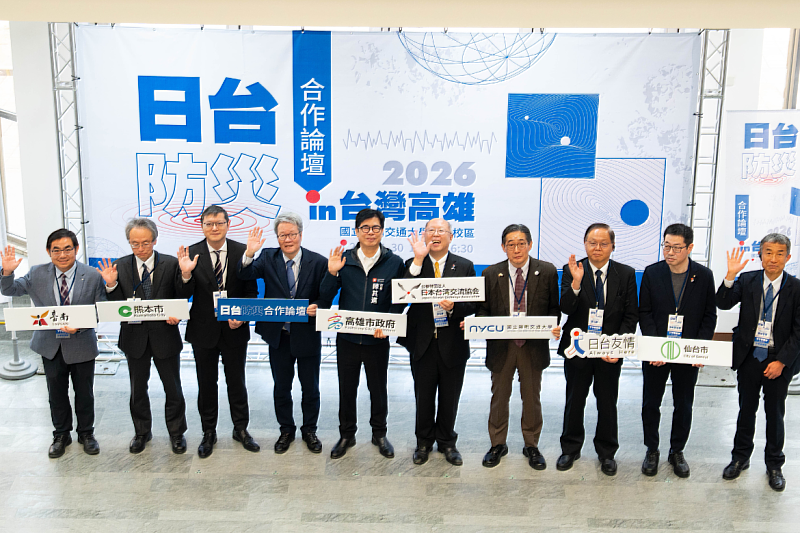
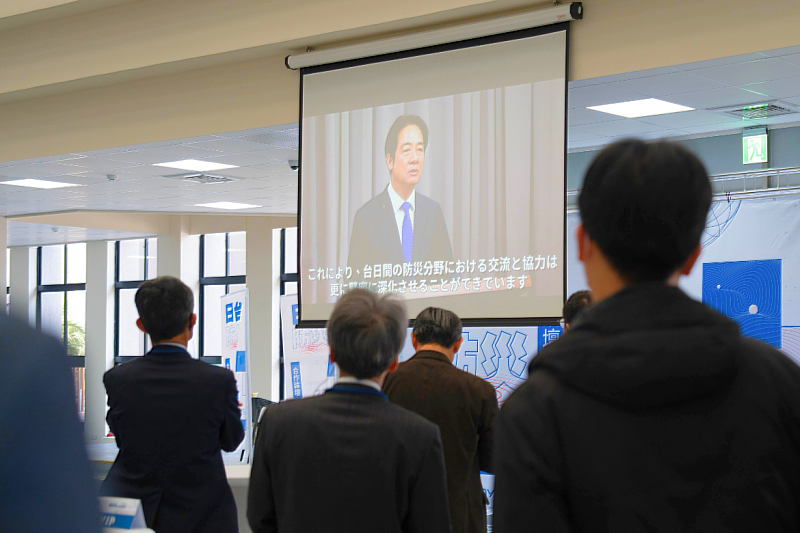
The forum opened with remarks by President Lai Ching-te (William Lai), Masafumi Oku, Chief Representative of the Japan–Taiwan Exchange Association, Sendai Mayor Kazuko Kori, Kumamoto Mayor Kazufumi Onishi, and Kaohsiung Mayor Chen Chi-mai — underscoring a shared commitment by both Taiwan and Japan, from national leadership to city governments, to deepen cooperation in disaster preparedness.
President Lai noted that Kaohsiung and Tainan have actively deployed smart technologies to strengthen responses to extreme weather, warning that future disasters are unlikely to remain isolated events. Instead, climate volatility and geopolitical risk may transform single hazards into compound crises that demand integrated preparedness.
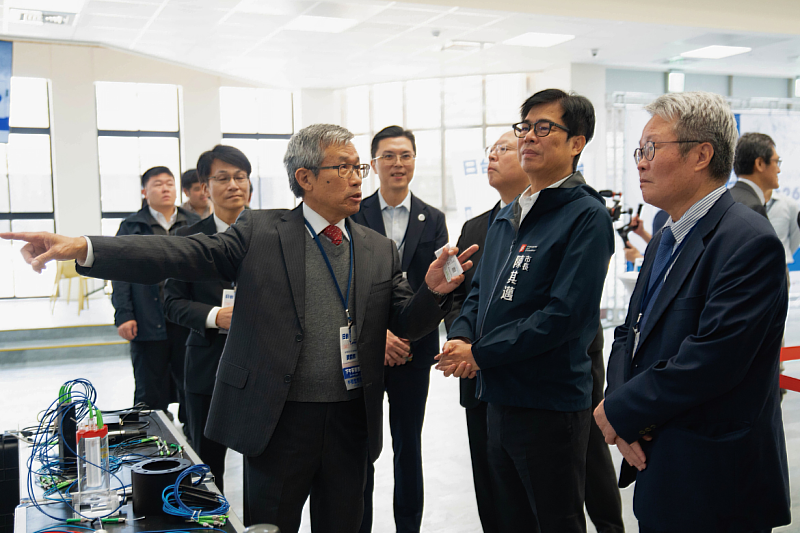
Mayor Chen highlighted that typhoon impacts in Kaohsiung have grown more severe and complex in recent years, often overlapping with seismic risks. He emphasized that Taiwan and Japan’s long history of mutual learning in disaster governance and urban recovery offers a practical framework for strengthening resilient cities.
Executive Yuan Minister without Portfolio and Minister of the Public Construction Commission, Chen Chin-de, followed with a policy-focused keynote linking governance, infrastructure resilience, and cross-agency coordination. His presence — along with senior engineering officials — reflected the central government’s sustained commitment to disaster preparedness and institutional integration.
The forum advanced along two parallel tracks: governance exchange and technical alignment.
On one front, participants established a shared language of resilience governance through international policy dialogue. On the other hand, city representatives from Sendai, Kumamoto, Kaohsiung, and Tainan engaged in detailed discussions of disaster experience, institutional design, emergency response protocols, and post-disaster recovery models. The emphasis was on city-level systems that are measurable, transferable, and operational — not abstract frameworks, but governance tools that can be tested and replicated.
A major focus was on integrating scientific and technological innovation into disaster management. Sessions examined how data modeling, AI-driven forecasting, and multi-source sensing systems can strengthen early warning capacity and real-time response, supported by collaboration among universities, government agencies, and private industry.
As advanced manufacturing and renewable energy systems increasingly underpin national infrastructure, their resilience has direct consequences for urban stability and supply chains. Industry representatives — including Micron Taiwan, Delta Electronics, and clean-energy startups — shared insights into high-tech facility fire safety, energy storage solutions, and distributed power systems capable of sustaining operations during post-disaster recovery.
The discussion framed public safety and industrial resilience not as separate domains, but as interconnected pillars of modern urban survival.
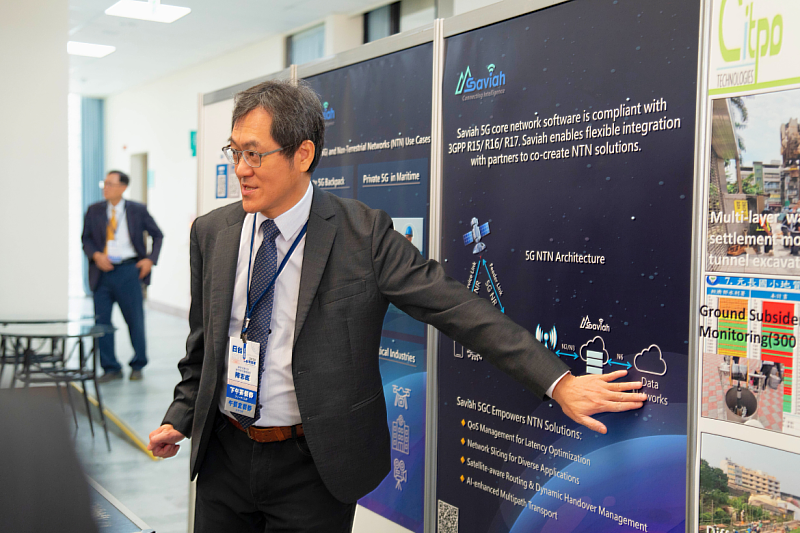
The forum emphasized that effective disaster governance begins long before emergencies occur. Public safety must be embedded in everyday governance, not activated only during crises.
Universities, organizers argued, serve as critical integration platforms — translating research, data tools, and technical expertise into operational policy and industry practice. The program highlighted evidence-based decision-making and cross-sector coordination, aiming to move beyond knowledge exchange toward field validation and sustained collaboration.
At its core, disaster preparedness remains about people. Stronger institutions, infrastructure, and technology ultimately exist to ensure that, when emergencies strike, information flows clearly, decisions move faster, and frontline responders are never left unsupported. Through continued Taiwan–Japan cooperation and industry–government–academic partnerships, each exchange becomes a step toward more actionable readiness — safeguarding the lives communities depend on.