

- NYCU and AMD Launch Advanced Research Program to Push AI and Next-Generation Semiconductor Breakthroughs
- NYCU Hosts Japan–Taiwan Forum on Disaster Lessons and the Future of Resilient Cities
- NYCU professor Ao-Lin Hsu invited as keynote speaker at Dubai’s Global Longevity Symposium
- NYCU and National Chiayi University Join Forces to Build Taiwan’s Smart Herbal Medicine Value Chain
- NYCU and University of Arizona Launch Talent and Innovation Hub to Advance Semiconductor and AI Collaboration
Expedition of the NYCU Mental Guts Service Team: Seeing Beyond Medical Records to See People
(中央社訊息服務20260211 16:46:39)While the entire city still basked in the lazy afterglow of New Year celebrations, the Medical Building of National Yang Ming Chiao Tung University (NYCU), nestled on the slopes of Beitou, was already ablaze with lights beneath the cold winter sun. From the classrooms came not the complex jargon of medicine, but the cheerful melodies of folk songs and the rhythmic laughter of rehearsals. On stage, members dressed as Emperor Qin Shi Huang and cavemen were making their final preparations for the “long-distance expedition” set to depart for Yuli in Hualien the following day.
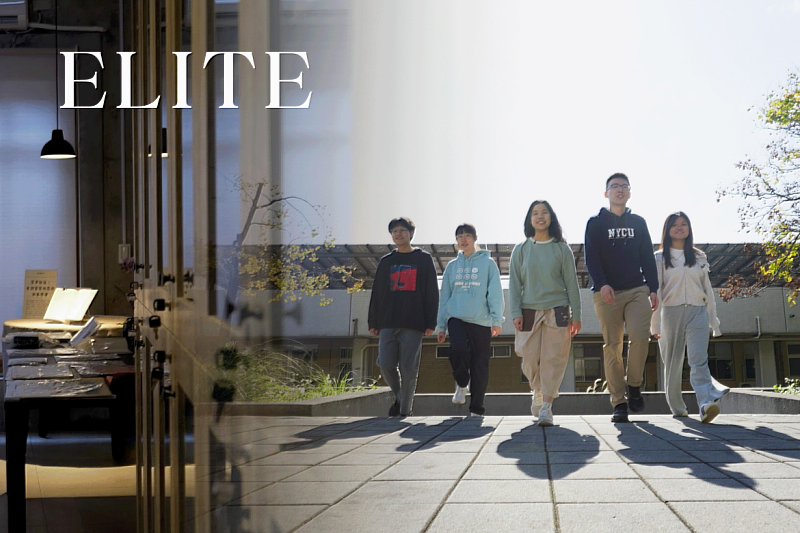
This group of young people, who mock themselves as having “a touch of foolishness,” are members of the NYCU Mental Guts Service Team (hereinafter referred to as the “Service Team”). Fresh off their intense final exams, they chose to put their winter vacation plans on hold, packing up and heading straight to Yuli in Hualien, to visit a group that they nicknamed “trainees”—residents living long-term in a mental health rehabilitation facility.
“They are our ‘trainees,’ but more than that, they are our friends,” said current team leader Dao-Yi Wang. Each outreach service stems from the Yang Ming Crusaders’ mission legacy. According to statistics from the National Health Insurance Administration, over 2.9 million psychiatric visits were recorded across Taiwan in 2021. Yet despite growing mental health awareness, mental illnesses remain shrouded in stigma and misunderstanding, exacerbated by urban-rural disparities.
Therefore, as a leading academic institution in Taiwan’s medical and life sciences, the Yang Ming Crusaders established the NYCU Mental Guts Service Team during the summer vacation in 2004. This team stands as the sole student-led initiative within the Yang Ming Crusaders system, dedicated to long-term, in-depth engagement in psychiatric healthcare settings. For over two decades, the Service Team has chosen to step beyond campus boundaries, delving into psychiatric healthcare institutions such as Yuli Hospital and Jianan Psychiatric Center to provide non-medical compassionate services. In recent years, it has expanded its service base to Kaohsiung Municipal Kai-Syuan Psychiatric Hospital, striving to respond to society’s diverse needs through practical action.
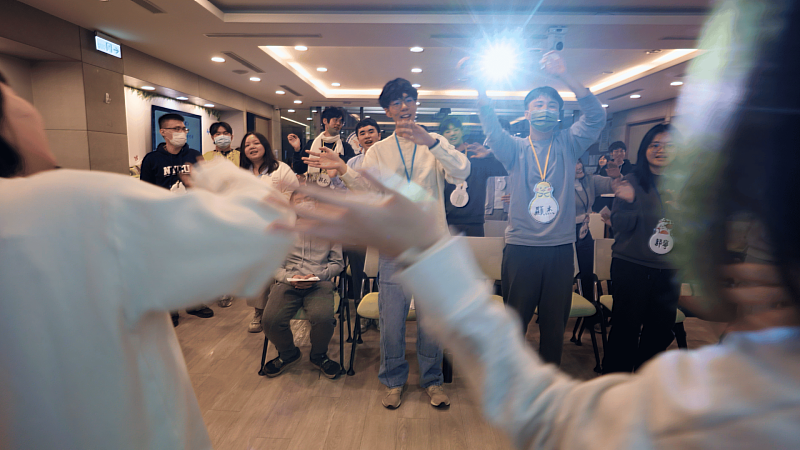
Currently, the Service Team comprises approximately 30 students from the School of Medicine, the Department of Physical Therapy and Assistive Technology, and the Department of Biomedical Engineering, etc. During winter and summer vacations, they launch a large-scale outreach service, designing “customized” static and dynamic rehabilitation activities for trainees across various institutions. Current president Min-Jhen Hong explained that trainees’ conditions vary significantly across institutions, necessitating highly customized activity designs. For instance, activities for trainees in chronic care wards and nursing homes, who still require daily assistance, are designed to be relatively simple and safe. Conversely, trainees at rehabilitation centers and community counseling centers, who mostly possess independent living and working abilities comparable to the general population, can engage in more challenging interactive activities.
This year, the Service Team planned static activities like handicrafts alongside dynamic exchanges such as carnivals and barbecues, culminating in a 70-minute large-scale stage production. “We aim to offer not just an event, but an experience that truly stimulates the senses and enriches spiritual life,” said Min-Jhen Hong.
“In the portrayal of mass media, mental illness is often linked to aggressive tendencies.” Dao-Yi Wang said frankly, “But after interacting with them, you realize they crave social connections and the outside world just as much as we do.” To break the confines of the ward, the Service Team began taking trainees beyond the institution—visiting the National Palace Museum, art galleries, and tourist factories. “You can clearly sense how their moods transform,” said current advisor Yu-Jie Lee. “These outings aren’t just about new experiences—they additionally show society that these individuals are just like us.”
During service, companionship isn’t always easy. Faced with trainees’ sudden emotional swings, members who engaged in first-time outreach service often felt overwhelmed. Thus, the Service Team developed a secret weapon passed down through generations—The Classic. This internal “notebook,” compiled since 2011, meticulously documents the practical experience of senior members over the years. From the characteristics of schizophrenia to standard operating procedures for interaction, and key considerations for each service location, every word and line embodies the wisdom accumulated through on-site service and helping others.
Yu-Jie Lee recalled an instance where a trainee broke down in tears at an event due to misunderstanding the reward rules. Drawing on experience and training techniques passed down by senior members, the team members gently redirected the trainee’s attention, successfully guiding them back to calmness. Beyond large-scale institutional services during winter and summer vacations, team members also participate in two regular service sessions each semester, including collaborating with different senior high schools to lead senior high students in serving nearby community organizations, extending the seeds of “de-stigmatization” into senior high school campuses. Yu-Jie Lee also shared, “During interactions, we inevitably encountered situations where senior high school students momentarily didn’t know how to respond, but we intervened and guided them appropriately. I believe this isn’t just a companionship experience for the trainees; it’s an important learning opportunity for both the senior high school students and us. It also helps the public gradually develop a deeper and more compassionate understanding of mental illness.”
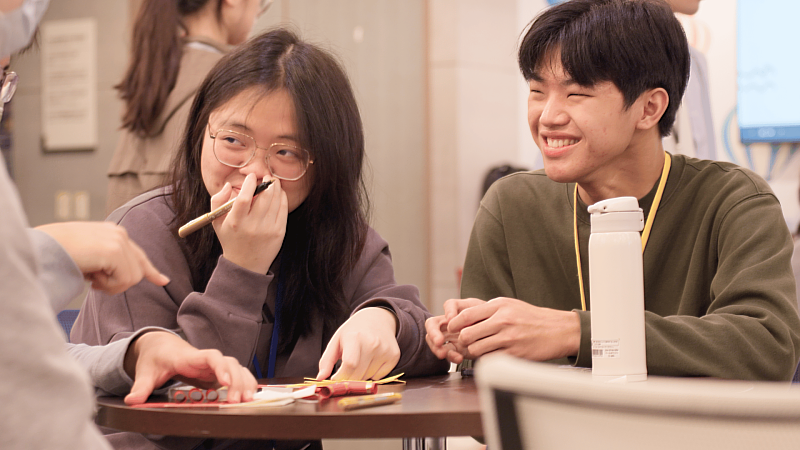
“This kind of learning is hard to come by in the classroom,” described Dao-Yi Wang. Through repeated interactions with trainees, these future doctors learned not only clinical skills but more crucial abilities: “emotional resilience” and “boundary awareness.” For them, this was not merely an outreach service but a profound lesson in the human “warmth” of medicine. It prepared them to see the whole person—not just the diagnosis on a medical record—when they don their white coats in the future.
“After joining the Service Team, I feel like I’ve become a real ‘tough cookie’!” Dao-Yi Wang joked with a touch of humor. Yet behind the joke lies the resilience and responsibility honed by NYCU medical students as they balance demanding coursework with their passion for service. As a native of Hualien, he particularly appreciates that service isn’t just one-way giving, and it’s a two-way learning process: while accompanying the trainees, he also gained deeper insights into building relationships and “making friends.”
Yu-Jie Lee also shared emotionally that seeing these trainees, who are often overlooked by society, smile because of the Service Team’s companionship, and even having trainees recognize her at second glance during their second meeting, made her deeply moved by the feeling of being remembered and needed. This experience strengthened her resolve to continue pursuing a career in psychiatry. Min-Jhen Hong also observed: “When facing them (the trainees), what matters most isn’t how much professional knowledge we can demonstrate, but whether we can engage with them with an attitude of equality and respect. Especially when they experience emotional fluctuations, we should treat them like simple, sincere friends.”
This expedition marks the continuation of the Yang Ming Crusaders’ mission spanning over four decades and stands as the most precious record of growth in these medical students’ academic journey. Observing these groups of young students whose eyes still sparkle when discussing their trainees and service missions, even after days without sleep, we may foresee a future where cold diagnoses and medical jargon are transformed into warm conversations and genuine exchanges in clinics. And in the distant future, the prejudices and barriers surrounding mental illness will gradually dissolve through the compassion and understanding of this generation of doctors.