




- Top Scholars from Taiwan, the U.S., and Korea Gather at NYCU to Advance Cancer Immunology Research
- NYCU AI Team Ranks Among Top Five Worldwide in CVPR 2026 Deepfake Detection Challenge
- NYCU Uses AI and Semiconductor Education to Support Ukrainian Students Reimagine the Future
- NYCU, Academia Sinica, and NTHU Develop “EcoDecibel” Sensors to Map Urban Noise in Real Time
- NYCU Brings Gamified Precision Elderly Care to Hsinchu in New AI-Powered Healthy Aging Initiative
NYCU Publishes PlayChip, Bringing Taiwan’s AI-Semiconductor Education Model to the World
(中央社訊息服務20260609 17:12:32)As artificial intelligence and semiconductor technologies reshape the global economy, National Yang Ming Chiao Tung University (NYCU) is introducing a new educational model designed to help young learners understand the technologies that increasingly influence everyday life.
NYCU has officially published the English edition of PlayChip: Taiwan’s E.S.G. EDU (Empowerment x Semiconductor x Gameplay), a book that combines the educational philosophy of the MIT Media Lab Scratch team, Taiwan’s semiconductor expertise, and the emerging concept of Physical AI. The publication presents a hands-on approach to teaching AI, sensing technologies, and semiconductor fundamentals through creative learning and interactive experiences.
The book is based on NYCU’s long-running BeLight AI Semiconductor Initiative, an industry-academia educational outreach program jointly developed by NYCU faculty, students, and industry partners, including TSMC. Through game design, sensor-based interaction, and AI-assisted learning, the initiative seeks to make advanced technologies more accessible to younger generations while fostering creativity, problem-solving skills, and technological literacy.
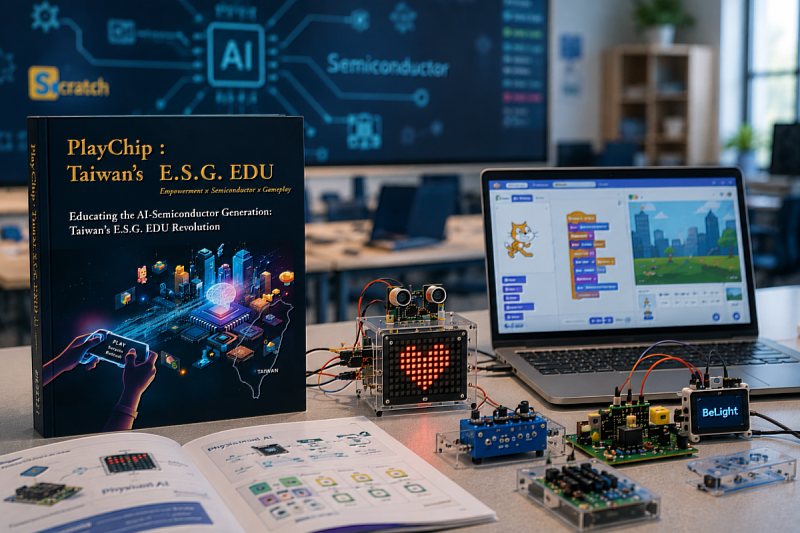
The BeLight initiative was created in response to a growing global demand for AI and semiconductor talent. Rather than introducing these subjects through traditional lectures, the program encourages students to learn through experimentation, creativity, and collaboration.
Using Scratch programming, Rabboni sensors, and interactive AI applications, students design projects that explore how sensors collect information, how semiconductors enable modern devices, and how intelligent systems interact with the physical world.
The approach reflects the educational philosophy promoted by MIT Media Lab Professor and Scratch founder Mitchel Resnick, who advocates learning through creating, playing, sharing, and reflecting. By integrating Scratch with physical sensors and real-time data interaction, students can experience firsthand how digital and physical systems work together.
The goal is not simply to teach coding, but to help students move from being consumers of technology to active creators who understand the principles behind it.
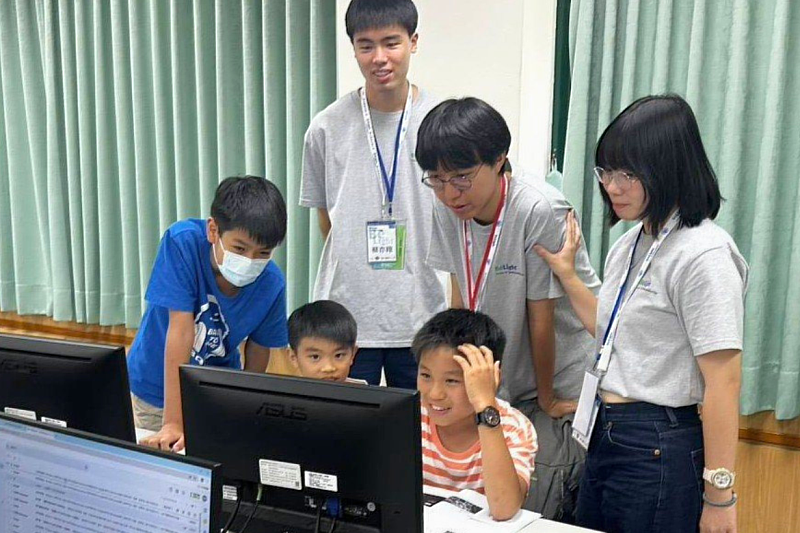
The success of the initiative has been supported by extensive collaboration among universities, local governments, and educators. Education authorities in Taoyuan, Kaohsiung, and Hsinchu have worked closely with NYCU to introduce AI and semiconductor learning activities into schools. During the previous summer alone, dozens of interactive camps and workshops were organized for students from elementary through high school.
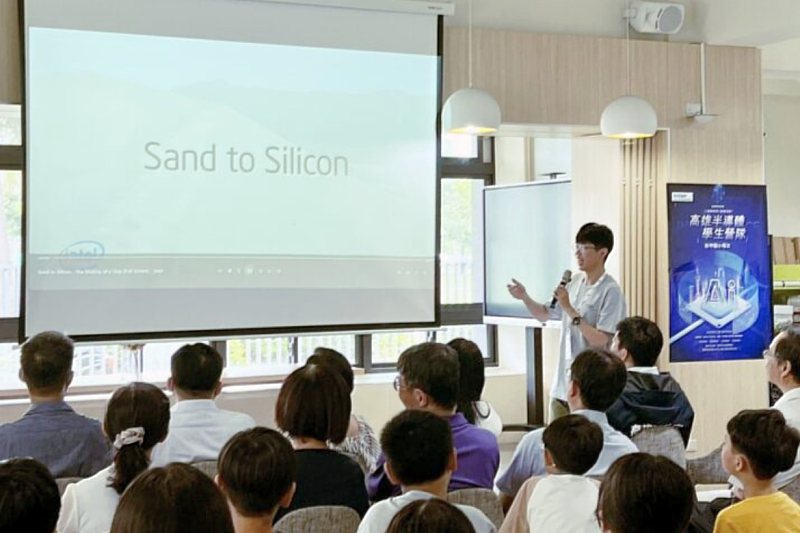
Through games, programming projects, and hands-on experiments, students explored concepts related to AI, sensors, and semiconductors while building practical problem-solving skills. These activities have generated a growing collection of teaching cases and demonstrated how advanced technologies can be introduced effectively at an early age.
The collaboration also highlights the important role that local educational innovation can play in strengthening a nation’s future technology workforce.
NYCU hopes that Taiwan’s decades of experience in the semiconductor industry can serve not only as an economic advantage but also as an educational resource for the international community.
The BeLight model has already attracted international attention. The initiative has received support from the Taiwan International Cooperation and Development Fund (TaiwanICDF) and has recently been incorporated into educational programs for Ukrainian students, delivered through fully English-language instruction.
By combining AI, semiconductors, and game-based learning, the program demonstrates how education can become a platform for international cooperation. It also offers a new example of how Taiwan can contribute to global society through technology education and talent development.
For NYCU, the message is clear: Taiwan is not only helping manufacture the world’s most advanced chips but also educating the next generation of innovators who will shape the future of AI and semiconductor technologies.
Looking ahead, NYCU plans to use the English edition of BeLight as a foundation for broader international collaboration. The university aims to work with overseas schools, educational organizations, and international partners to establish a scalable AI-semiconductor education framework. Future initiatives will include Train-the-Trainer programs, international student exchanges, and cross-border creative competitions that encourage students to explore emerging technologies through hands-on learning.
In the book’s foreword, NYCU President Chi-Hung Lin emphasizes that while AI and semiconductors are transforming the world, education must remain focused on cultivating responsible citizens with ethical awareness, social responsibility, and human-centered values. “BeLight is more than a textbook,” he writes. “It represents an educational practice that integrates technology, humanity, and university social responsibility.”
NYCU also expressed its gratitude to MIT Media Lab Professor Mitchel Resnick, the Scratch Foundation, MIT Media Lab, the TSMC Charity Foundation, and the TSMC Education and Culture Foundation for their long-term support of the initiative.
As international attention continues to focus on Taiwan’s semiconductor industry, NYCU believes the country has an opportunity to contribute in another important way: by sharing educational models that help young people understand, create, and innovate with the technologies shaping the future.