




- NYCU Student Team Reaches Finals at Singapore Autonomous Underwater Vehicle Challenge
- NYCU Publishes PlayChip, Bringing Taiwan’s AI-Semiconductor Education Model to the World
- Top Scholars from Taiwan, the U.S., and Korea Gather at NYCU to Advance Cancer Immunology Research
- NYCU AI Team Ranks Among Top Five Worldwide in CVPR 2026 Deepfake Detection Challenge
- NYCU Uses AI and Semiconductor Education to Support Ukrainian Students Reimagine the Future
NYCU Patents Smart Surface Technology to Eliminate Signal Dead Zones
(中央社訊息服務20260611 10:40:37)In an era where constant connectivity has become an everyday expectation, reliable wireless communication is no longer a luxury—it is essential. Yet many people are familiar with a frustrating experience: taking a few steps around a corner or entering another room, only to see their signal strength suddenly drop.
Researchers at National Yang Ming Chiao Tung University (NYCU) have developed a new communication technology designed to solve these signal dead zones and deliver more stable wireless connections in complex environments.
The innovation, recently granted a patent, was developed by Associate Professor Jiun-Hung Yu of NYCU's Institute of Communications Engineering. The technology is based on a Reconfigurable Intelligent Surface (RIS), a smart reflective system capable of dynamically directing wireless signals toward users and devices.
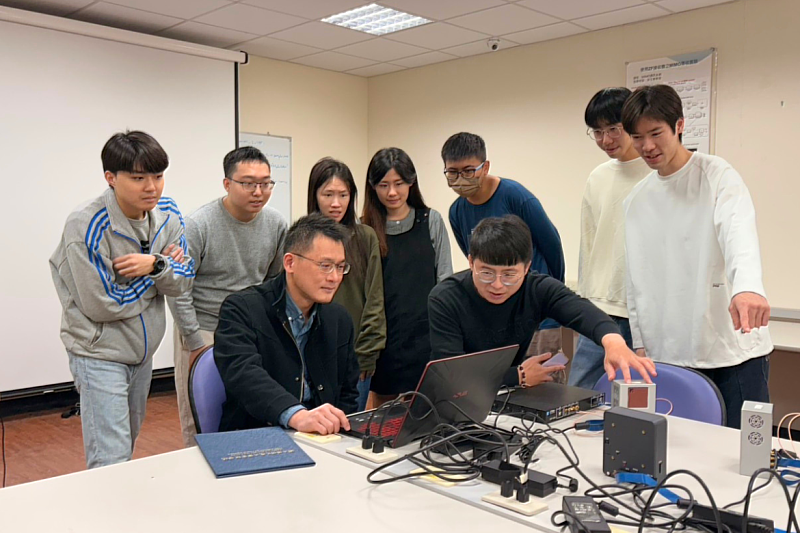
Unlike conventional wireless networks, where walls and buildings often block or weaken signals, RIS technology transforms surrounding surfaces into active components of the communication system. The intelligent surfaces can be installed on indoor walls and ceilings, building facades, glass windows, digital billboards, or even mounted on uncrewed aerial vehicles (UAVs). By intelligently reflecting and steering wireless signals, the system can reduce signal loss, minimize interference, and improve overall connection quality.
Yu compares the technology to a "smart mirror" that continuously identifies the locations of signal sources and users, then redirects signals to where they are needed most. "Instead of allowing signals to disappear after hitting obstacles, the system turns those obstacles into teammates," Yu explained. "Walls no longer become barriers—they become part of the communication network."
The technology is particularly valuable in environments where large numbers of users are connected simultaneously, such as transportation hubs, concert venues, sports arenas, and major public events, where network congestion often degrades communication quality.
Beyond terrestrial wireless communication, the patented technology also shows significant potential for satellite communication systems. By precisely redirecting satellite signals toward users on the ground, RIS-enabled networks could help improve coverage in remote regions, mountainous areas, offshore locations, and disaster-affected zones where conventional communication infrastructure may be limited or unavailable.
The enhanced coverage and reliability could support a wide range of critical applications, including emergency response operations, telemedicine services, distance learning programs, and digital infrastructure development in underserved communities. Researchers believe the technology could play an important role in narrowing the digital divide by providing more consistent internet access to rural and remote populations.
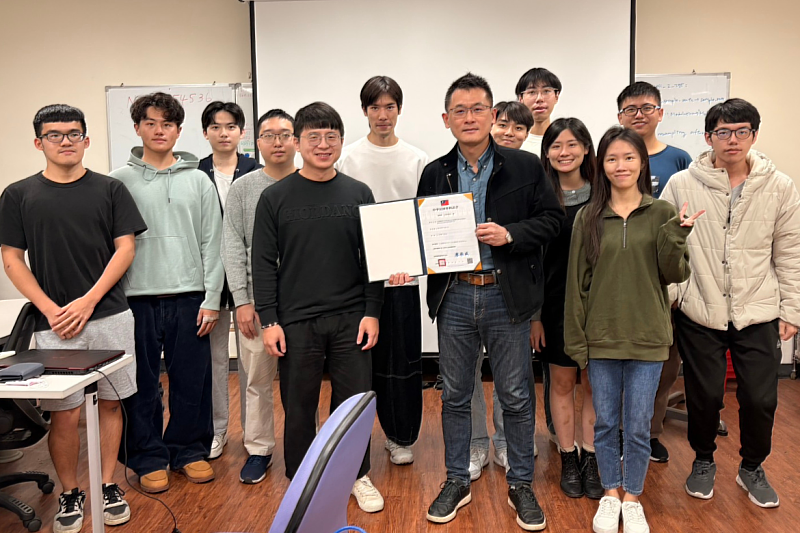
As global demand for high-capacity wireless networks continues to grow, intelligent surface technologies are increasingly viewed as a key enabler of next-generation communications.
The patented RIS system could contribute to the evolution of 5G, emerging 6G networks, and future satellite communication architectures. By enabling smarter and more efficient signal propagation, the technology may also support the expansion of smart cities, autonomous systems, and large-scale Internet of Things (IoT) applications.
With its ability to transform ordinary surfaces into intelligent communication infrastructure, the innovation demonstrates how future networks may become not only faster but also more adaptive, resilient, and accessible.