




- NYCU and Mackay Memorial Hospital Publish Study on Brainwave Monitoring During General Anesthesia
- NYCU Joins Taiwan Regenerative Medicine Alliance to Advance Next-Generation Healthcare
- NYCU Brings Global Nursing Leaders Together to Explore the Future of Healthcare in the AI Era
- NYCU Brings AI and Autonomous Vehicle Research to Penghu to Advance Smart Island Governance
- NYCU Vulpes Racing Takes Third Place at Formula Student Taiwan, Sets Sights on Japan
NYCU Student Rocket Team Completes Full Mission at World’s Largest Rocket Competition
(中央社訊息服務20260723 11:31:19)From the classrooms of National Yang Ming Chiao Tung University (NYCU) to the desert skies of West Texas, a student-built rocket inspired by Taiwan’s sea goddess has completed one of its most ambitious missions yet.
NYCU’s student rocket team, Formosan Fox, traveled to the United States to compete in the 2026 International Rocket Engineering Competition (IREC), the world’s largest collegiate rocket competition. Competing against 174 student teams from around the globe, the team successfully launched and fully recovered its rocket, finishing seventh among participating Asian teams and demonstrating Taiwan’s growing capabilities in student-led aerospace engineering.
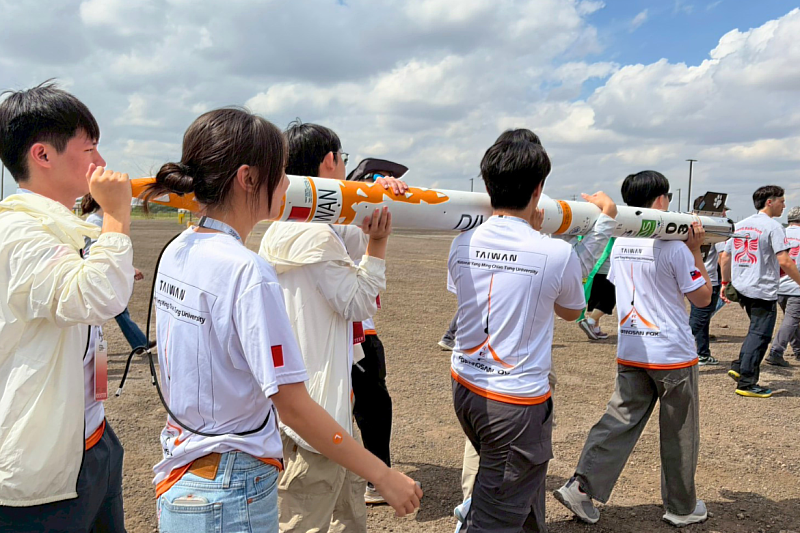
For this year’s competition, the team named its rocket DIVA, inspired by Mazu, Taiwan’s revered goddess of the sea and protector of travelers. The name symbolizes safe journeys and successful voyages—a fitting metaphor for a mission centered on reliable flight, stable communications and full vehicle recovery.
Rather than serving merely as a cultural reference, DIVA reflected the team’s engineering priorities. Every stage of the project emphasized flight safety, mission reliability and successful recovery, translating a traditional cultural symbol into tangible technical objectives.
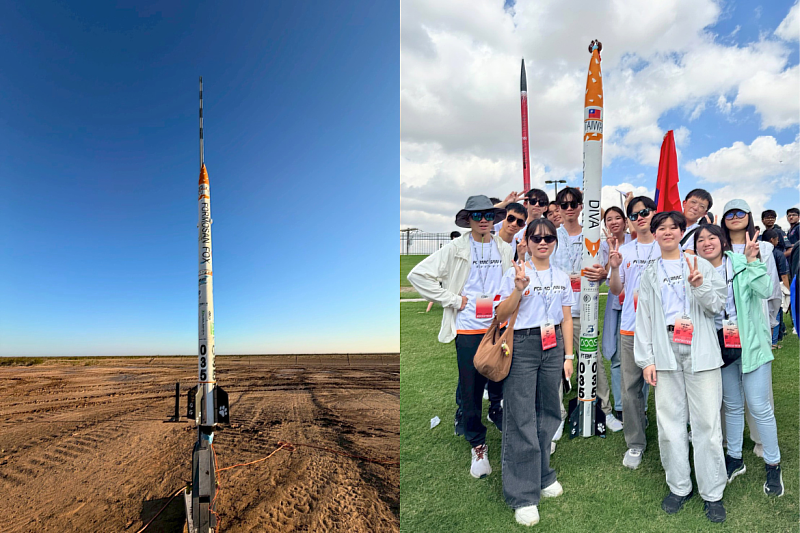
Recovering the rocket intact was one of the team’s primary goals this year. In a previous competition at the Spaceport America Cup, the team was unable to recover the rocket’s nose cone. This experience drove significant improvements to this year’s recovery, tracking and communication systems.
To improve mission reliability, the team developed a non-pyrotechnic separation mechanism and a dual-stage parachute deployment system to reduce opening shock during descent. A dedicated ground communication station also provided real-time telemetry, allowing the team to continuously monitor flight performance, rocket attitude and the predicted landing location, greatly increasing the likelihood of complete vehicle recovery.
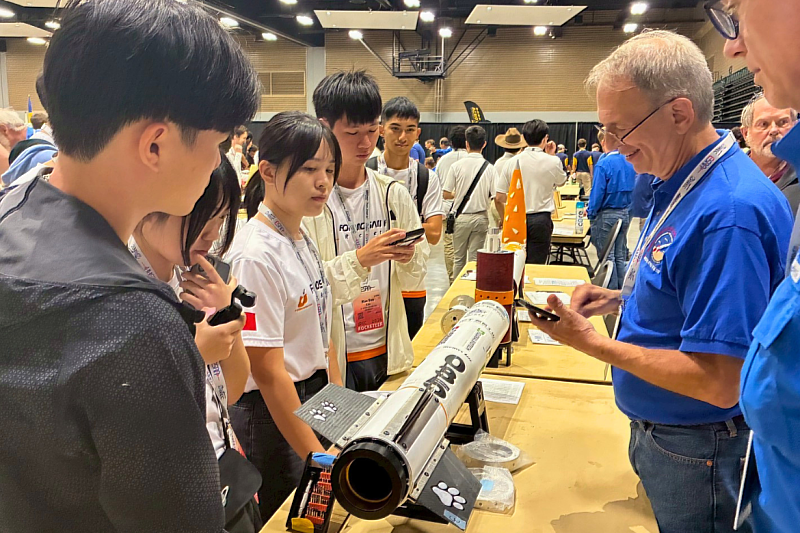
Preparing for IREC required nearly a year of design, manufacturing, testing and repeated revisions. “The greatest challenge in rocket development is rarely the initial design,” said Kao-San Lin, captain of Formosan Fox. “It’s discovering problems during testing and having the determination to solve them, one by one.”
Team members balanced demanding coursework with late-night fabrication and testing sessions, often spending evenings in the workshop after classes. Despite academic deadlines and project pressures, the opportunity to see the rocket successfully lift off remained the team’s strongest motivation.
Professor Lua Kim Boon of NYCU’s Department of Mechanical Engineering, who led the team, said the project demonstrated the students’ ability to integrate engineering design, manufacturing, testing and teamwork into a complete aerospace system. He noted that the competition also provided an invaluable opportunity for students to showcase their technical capabilities on an international stage.
Professor Ying-Hao Liao, director of NYCU’s Institute of Space Systems Engineering (iSSE), encouraged the students for transforming classroom knowledge into real-world engineering experience. From laboratories in Taiwan to the launch fields of Texas, he said, the team had turned pressure into performance while demonstrating the ambition of Taiwan’s next generation of aerospace engineers.
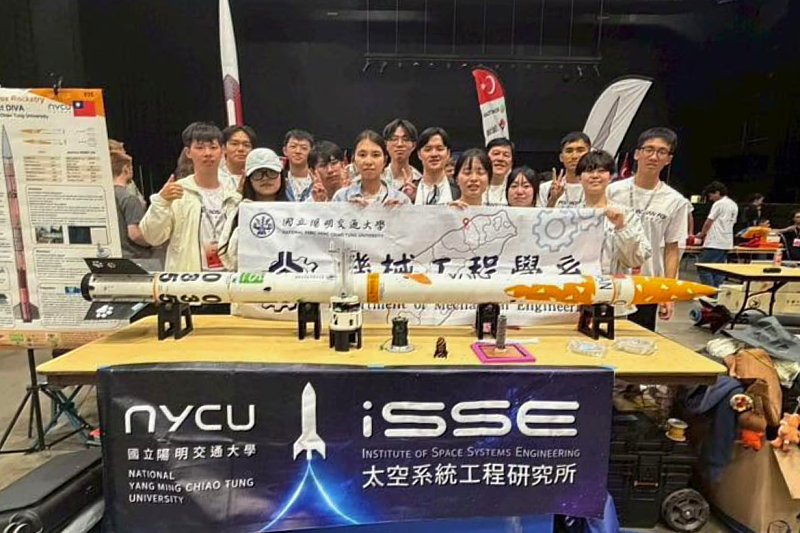
The DIVA project also expanded beyond rocket engineering through collaborations with Taiwan student satellite team SIGHT Space on a CanSat payload mission, and with the space education initiative Kuroro, a popular educational mascot promoting space science among children.
For the Formosan Fox team, participating in IREC represents more than a single international competition. It is an opportunity to demonstrate the strength of Taiwan’s engineering education while inspiring more young people to explore careers in aerospace science and technology.