




- NYCU Honors Six Distinguished Alumni in Student-Led Ceremony Showcasing Cross-Sector Innovation
- NYCU Partners with HHRI and RPI to Develop High-Speed Micro-LED Quantum Random Number Generator
- NYCU Showcases Architectural Futures, Rethinking Urban Resilience and Design
- NYCU Leads Smart City Innovation Hub, Advancing AI-Driven Urban Governance with Global Partners
- NYCU and NTHU Share Overall Title at the 58th Mei-Chu Games
NYCU Study Redefines Battery Design, Boosting Capacity by 167% for Next-Generation EVs
(中央社訊息服務20260330 12:23:35)Electric vehicle (EV) battery life and charging speed remain among the most critical concerns for consumers worldwide. Now, a research team at National Yang Ming Chiao Tung University (NYCU) has unveiled a breakthrough that could reshape the future of battery technology.
Led by Professor Yu-Sheng Su of NYCU’s International College of Semiconductor Technology, the team has developed a novel lithium-ion battery design that increases capacity by 167%, offering a promising new direction for EV power systems and large-scale energy storage applications. The study has been published in the international journal Small Structures.

Unlike many conventional battery materials, LTO undergoes almost no volume expansion during charging and discharging. This structural stability translates into exceptional cycle life and thermal safety, making it particularly suitable for applications that require frequent, fast charging, such as electric transportation and grid-scale energy storage.
However, LTO has historically faced a major limitation: low energy density, which means it can store less energy than other materials, restricting its adoption in EV markets.
Seeking to overcome this limitation, Professor Su’s team at the BEST Lab (Battery Energy Semiconductor Technology Lab) revisited a fundamental assumption in lithium-ion battery design: that the electrolyte must contain lithium ions for the battery to function. Their findings challenge this long-held belief.
The researchers demonstrated, for the first time systematically, that LTO can operate effectively even in a sodium-ion electrolyte—without lithium ions present in the electrolyte itself. Under specific conditions, the battery exhibited enhanced capacity, improved cycling stability, and superior rate performance compared to conventional lithium-based systems.
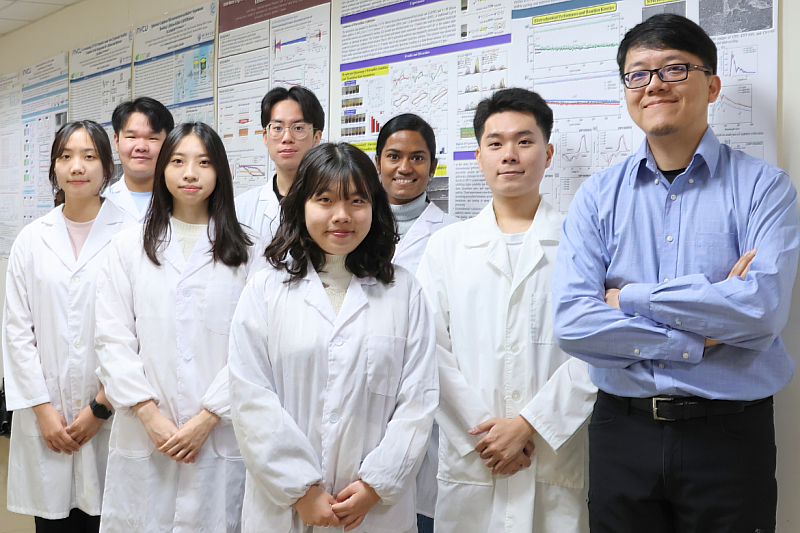
According to Prof. Su, the key lies in a hybrid design combining lithium metal with a sodium-ion electrolyte.
While lithium ions remain the primary charge carriers responsible for energy storage, sodium ions play a crucial supporting role. A small number of sodium ions enter the LTO crystal structure, causing a slight and reversible lattice expansion.
This process is like creating extra space on a tightly packed bookshelf—making it easier to insert and remove books. Similarly, the expanded lattice allows lithium ions to move more freely, increasing the material’s overall storage capacity without compromising its inherent stability.
The innovation offers a rare combination of advantages: high safety, long lifespan, fast charging capability, and significantly increased capacity. Beyond performance gains, the approach may also deliver economic benefits. Compared to lithium, sodium is more abundant and cost-stable, suggesting that partially replacing lithium salts in electrolytes could reduce long-term costs and ease supply chain pressures—particularly for large-scale batteries and energy storage systems.
As the global push toward electrification accelerates, the NYCU study provides a compelling glimpse into how rethinking fundamental design principles can unlock the next generation of energy technologies.